What's Inside
- The four-part mountain bowl
- Grains that hold their texture
- Protein portions for active days
- Three acid-led sauces
- Crunch that stays crisp
- A practical pre-dawn workflow
- The final acid adjustment
Build Every Mountain Bowl in Four Passes
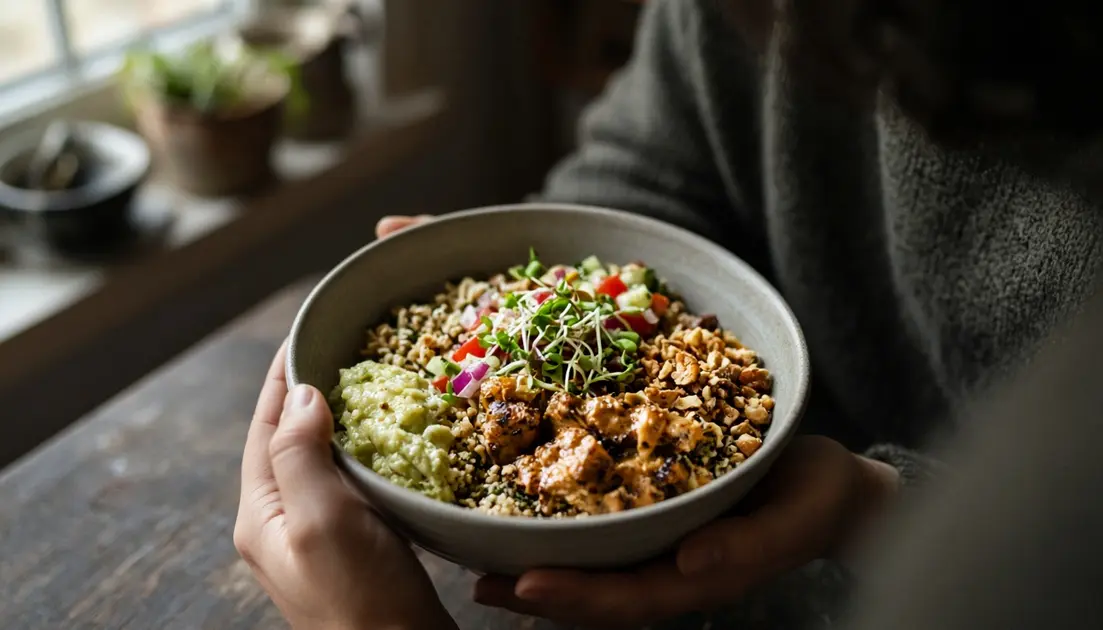
How do you build a morning meal that sustains you from first chair to late afternoon without weighing you down? Use a strict four-part architecture: complex carbohydrates, measured protein, a vibrant sauce, and textural crunch.
I assemble these bowls in that order because each pass has a distinct job. Grain supplies durable bulk. Protein adds staying power and richness. Sauce carries salt, acidity, and the bowl's central flavor. A dry or fresh topping breaks up the soft textures at the end.
“The mountain-bowl breakdown is fixed at four jobs: grain for durable bulk, measured protein, acid-led sauce, and last-minute crunch.”
This modular sequence also makes portion changes easy. A skier facing a full day can increase the grain without doubling the sausage. A lighter eater can keep the same tomatillo, egg, and pepita profile in a smaller serving. For one active-day bowl, begin with 1 to 1 1/2 cups of cooked grain, add roughly 2 eggs or 2 to 3 ounces of trout or tempeh, spoon over 1 to 2 tablespoons of sauce, and finish with 1 to 2 tablespoons of crunch.
Large diner breakfasts tend to pile refined toast, potatoes, eggs, cheese, and generous meat portions onto one plate. That combination can feel sluggish during sustained movement, especially when rich meat and fat dominate the meal. A mountain bowl controls those ratios while preserving the pleasures people want from comfort food: warmth, savory depth, sauce, and a satisfying finish.
When possible, eat the bowl 60 to 120 minutes before skiing or hiking. Allow the longer end of that window when breakfast includes chorizo, nuts, or a rich tahini sauce.
Choose a Grain That Matches the Morning
The best base depends on the outing and the texture you want at the final bite. Farro stays chewy beneath sauce. Quinoa feels lighter and separates cleanly. Steel-cut oats create a spoonable bowl suited to soft eggs and smoked trout, while short-grain brown rice turns cohesive enough to carry chopped vegetables and gochujang dressing.
Cook Flavor Into the Base
Water produces a neutral grain that asks the toppings to do all the work. Unsalted or lightly salted bone broth and seasoned vegetable stock distribute flavor through every kernel. Season the liquid before adding the grain, then taste again after cooking; broth can reduce and concentrate as moisture escapes.
- Pearled farro: Use about 1 cup of grain to roughly 3 cups of liquid. Cook for 25 to 35 minutes, then drain excess liquid. Intact whole-grain farro may require 40 to 60 minutes.
- Quinoa: Simmer roughly 1 cup of rinsed quinoa with close to 1 3/4 cups of stock for 15 to 18 minutes. Rest it covered for about 5 minutes before fluffing.
- Steel-cut oats: Maintain a gentle simmer for 20 to 30 minutes, stirring enough to prevent sticking without turning the oats pasty.
- Short-grain brown rice: Plan for 40 to 50 minutes of cooking and a roughly 10-minute covered rest.
White rice and refined grains provide quick energy, though their lower fiber content offers less support for sustained digestion during a long ski session or hike. There is an important field-level exception: people who experience gastrointestinal discomfort during exertion may tolerate white rice better immediately before activity. This higher-fiber blueprint suits diners who already digest whole grains comfortably.
Cool Grain Quickly
Transfer batch-cooked grain to shallow containers within about 2 hours. Refrigerate it at 40°F or below and use it within 3 to 4 days.
Keep the Protein Measured and Distinct
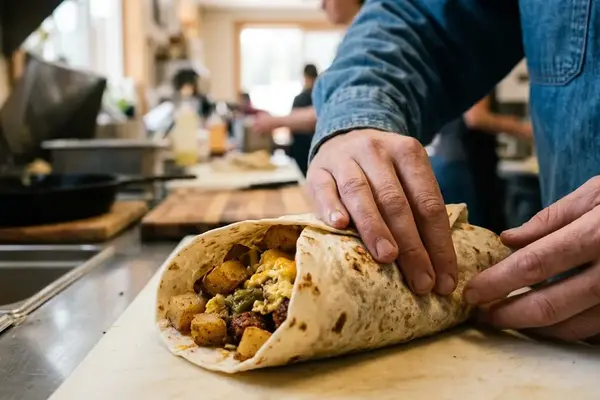
Choose protein after the grain so its richness remains proportional to the bowl. Soft-boiled eggs and smoked trout settle naturally into oats or farro. Marinated tempeh pairs neatly with quinoa and brown rice. Chorizo brings fat, salt, and spice at once, so a little carries through the whole serving.
A practical portion is roughly 2 large eggs, 2 to 3 ounces of smoked trout or tempeh, or 1 to 2 ounces of cooked chorizo. Treat the chorizo like a concentrated topping rather than a full protein bed. Loading a cold-weather breakfast with heavy meat can slow the meal down just when the body needs comfortable movement.
Use Temperature as Another Layer
Warm protein over room-temperature or gently warmed grain creates a more interesting bite than a uniformly hot bowl. The egg remains tender, trout keeps its delicate texture when served chilled, and dressed greens avoid wilting on contact.
Altitude changes the egg routine. At roughly 9,000 to 10,000 feet, water boils near 193°F to 195°F. Lower refrigerated large eggs into already boiling water for 8 1/2 to 10 minutes, then chill them in ice water for at least 5 minutes. Test one egg before preparing a batch because egg size, starting temperature, and burner output affect the center.
Food-safety temperatures still matter on hurried mornings. Cook crumbled raw chorizo to about 160°F and reheat previously cooked chorizo to around 165°F. Reheat cooked tempeh until steaming throughout. Keep cooked grain and protein at room temperature for no more than 2 hours, reduced to roughly 1 hour when the surrounding temperature exceeds 90°F.
Let the Sauce Decide the Bowl's Direction
Sauce turns separate ingredients into a composed breakfast. It reaches into the grain, seasons the protein, and gives roasted vegetables a shared flavor. The strongest versions lead with acidity because lime, lemon, or rice vinegar cuts through dense grain and rich protein.
Tomatillo Salsa Verde for Eggs or Chorizo
Roast about 1 pound of husked tomatillos with 1 to 2 chiles until blistered, usually 8 to 12 minutes under a broiler. Blend them with lime, cilantro, and salt. The result brings sharp, green flavor to soft eggs and handles chorizo's richness without hiding its spice.
Lemon-Tahini for Trout and Vegetables
Whisk roughly 1/2 cup tahini with about 3 tablespoons lemon juice and 1 small grated garlic clove. Add 1/4 to 1/3 cup warm water gradually until the sauce pours in a steady ribbon. Add the water slowly; tahini often thickens before it loosens.
Gochujang-Sesame for Tempeh
Whisk roughly 2 tablespoons gochujang with about 2 tablespoons rice vinegar, around 1 tablespoon toasted sesame oil, and 1 to 2 teaspoons honey or maple syrup. This dressing gives nutty tempeh a spicy, tangy edge and works especially well with brown rice.
Refrigerate fresh salsa verde for 3 to 4 days. Tahini and gochujang dressings prepared with clean utensils keep for 5 to 7 days at 40°F or below. If either dressing tightens in the refrigerator, whisk in 1 to 2 teaspoons of water before serving.
Protect the Crunch Until the Last Minute
Texture is the component most often lost in home-cooked breakfast bowls. Grain, roasted vegetables, eggs, and sauce all sit on the soft side. Without contrast, even excellent flavors begin to feel flat after several bites.
Before serving, assess the bowl as a whole. If every component yields easily to the fork, add one toasted element and one crisp fresh element. Toasted pepitas bring brittle crunch; fried shallots offer a delicate, savory layer; tamari-roasted almonds add salt and density; thin watermelon-radish slices contribute snap and cool moisture.
- Toast pepitas in a dry skillet over medium heat for 3 to 5 minutes, shaking frequently. Remove them when they begin to pop and smell nutty.
- Roast almonds lightly tossed with tamari at around 325°F for 10 to 14 minutes, stirring once. Cool them completely before storage.
- Slice watermelon radish 1/16 to 1/8 inch thick and refrigerate it in a sealed container for 1 to 2 days.
Sequence determines whether that work survives. Spoon on the sauce first. Add radish next, then scatter fried shallots, nuts, or seeds over the finished bowl within 1 to 2 minutes of serving. Store unused crunchy toppings in a dry airtight container, far from refrigerated grains and sauces.
Sauce Before Crunch
Once nuts or shallots touch a wet sauce, their useful crispness has a short life. Finish every other step before opening the topping container.
Stage the Bowl Before a Pre-Dawn Start
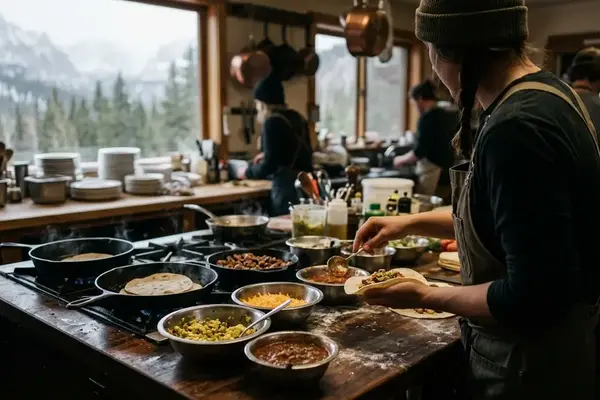
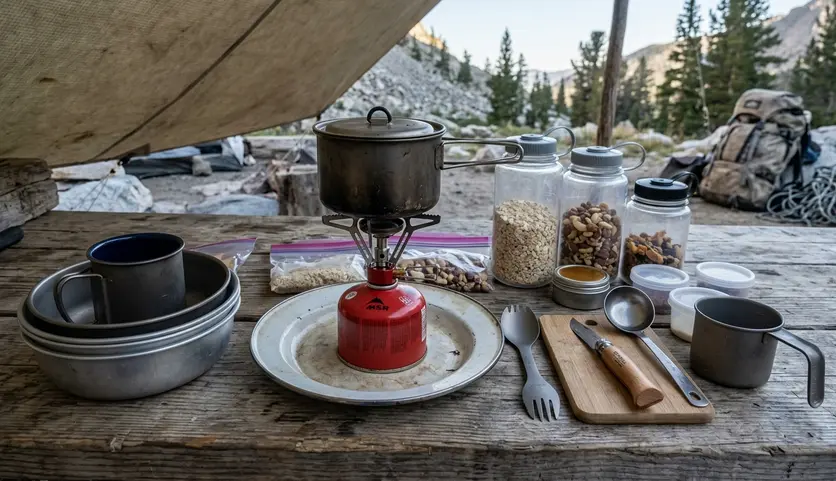
An alpine morning leaves little room for chopping, cooling, and washing pans. The realistic solution is a divided prep schedule that moves long cooking tasks away from departure day.
Two Evenings Before
Cook enough grain for the planned bowls and roast any firm vegetables. Budget 45 to 70 minutes for a long-cooking grain and vegetables, with about 10 to 15 minutes of active work. Grains and roasted vegetables can share a refrigerated container for 3 to 4 days.
The Night Before
Make the sauce, portion the protein, wash the greens, slice the radish, and pack crunchy toppings in a dry container. These tasks take 15 to 25 minutes when the grain is already cooked. Keep sauces, leafy greens, radishes, and crunchy toppings separate from the base.
Before Dawn
- Place 1 to 1 1/2 cups of grain and vegetables in a skillet with 1 to 2 tablespoons of stock or water.
- Cover and heat over medium-low for 4 to 7 minutes, stirring once.
- Warm cooked chorizo or tempeh separately. Keep smoked trout chilled.
- Add fresh greens and sauce after the hot components enter the bowl.
- Finish with radish, nuts, seeds, or fried shallots immediately before eating.
For a faster microwave method, moisten and cover the grain, then heat it in roughly 45-second intervals. Stir between intervals until it reaches about 165°F, usually within 90 seconds to 3 minutes. A bowl assembled from refrigerated components should take 6 to 10 minutes from the first reheat to the final topping.
Finish With the Acid That Wakes Everything Up
Taste only after the grain, protein, sauce, and crunch are assembled. Then correct the acid. Lime suits salsa verde and chorizo. Lemon sharpens tahini and smoked trout. Apple cider vinegar wakes up greens, while a vinegar-forward hot sauce can rescue a bowl that tastes dense.
Start with 1 to 2 teaspoons of fresh citrus juice or vinegar per bowl. Toss or stir, then taste before adding more. For roughly 1 packed cup of greens, whisk about 1 teaspoon apple cider vinegar with around 2 teaspoons olive oil and a pinch of salt; dress the leaves immediately before serving.
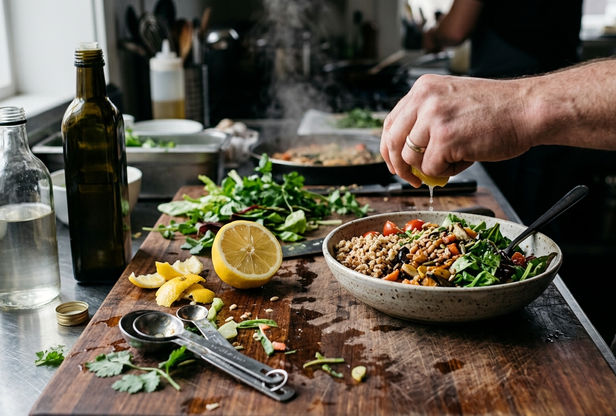
Cut citrus keeps in a sealed refrigerated container for 2 to 3 days, but juice it during assembly for the brightest aroma. Make the adjustment within 1 to 2 minutes of serving so the greens stay crisp and the dry toppings retain their snap.
Never skip the acid. A final squeeze of lime, lemon, or vinegar is the decisive move that turns a heavy breakfast into a vivid start for a mountain day.