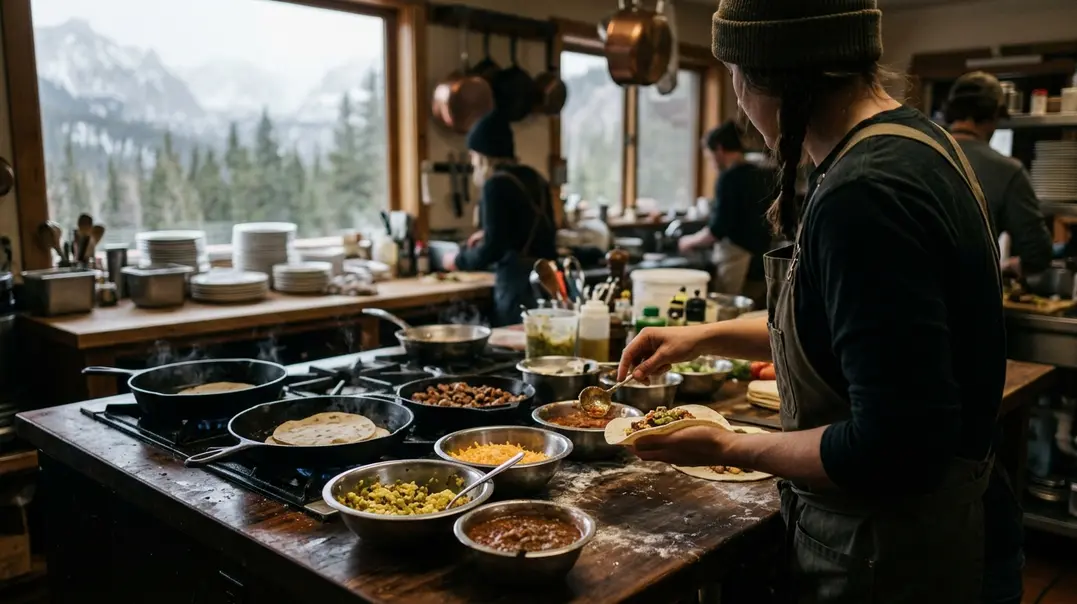
Quick Trail Guide: Key Takeaways
Summary: Colorado-style tacos rely on roasted potatoes and authentic green chile for sustained energy. Proper layering prevents soggy tortillas during mountain transit, and high-altitude cooking requires specific adjustments for eggs and potatoes.
- Use flour tortillas in the 8- to 10-inch range to hold eggs, potatoes, chile, and meat without tearing during wrapping.
- Plan a cook-to-pack window of 20 to 35 minutes. Dedicate 10 to 15 minutes for final cooking and assembly, then 10 to 20 minutes for foil wrapping, staging, and packing while the tacos are still hot.
The Anatomy of a Colorado Breakfast Taco
A reliable mountain breakfast prioritizes trail durability. The build starts with a sturdy starch, relies on concentrated chile flavor, and demands a strict wrapping sequence before you even think about adding extras. The tortilla acts as a structural carrier—not just a wrapper.
Pueblo-style green chiles form the backbone of this flavor profile. These are commonly roasted in late summer through early fall, with the strongest fresh-chile availability running from late August through October in Colorado markets. When you pair that heat with crisp potato cubes, you get a filling that survives a bumpy drive to the trailhead.
Cut your potatoes into 1/2-inch cubes. That specific size browns on multiple sides in a skillet while still cooking through in a practical morning prep window. Waxy potatoes hold their shape better for these cubes, while russet potatoes crisp aggressively but can crumble if over-parboiled.
Quick Tip: Warm your tortillas for 20 to 40 seconds per side on a dry skillet before filling. The fat in the tortilla softens, allowing the edges to fold instead of cracking.
Sourcing and Prepping Your Ingredients
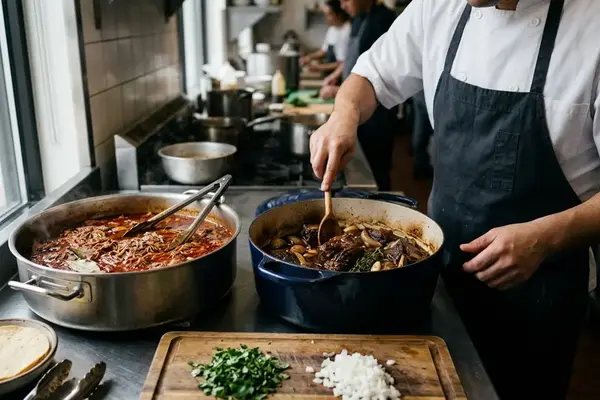
Prep work dictates the final flavor. You want to sequence your morning to capture every bit of rendered fat and roasted heat. Start by roasting fresh green chiles under a broiler or on a hot grill for 6 to 10 minutes. Turn them until the skins blister on most sides, then steam them covered for 10 to 15 minutes before peeling.
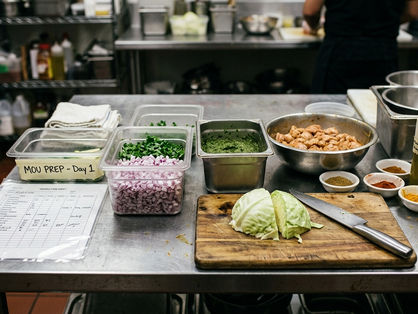
If you are using a jarred option, choose a roasted green chile product that lists chiles ahead of thickeners or sweeteners. Drain the excess liquid for 3 to 5 minutes before adding it to your eggs or potatoes.
Cook bulk breakfast sausage until no pink remains and the crumbles reach 160°F. If you prefer bacon, cook it until the fat has rendered and the strips are crisp enough to crumble, which usually takes 8 to 12 minutes in a skillet over medium heat. Hold the rendered fat to 1 to 2 tablespoons for the potato hash. Using more than that coats the tortilla and makes the final wrap greasy.
Step-by-Step Cooking Guide
Long-term experience revealed that cooking these tacos requires managing layers of dryness and moisture. You crisp the potatoes first, scramble the eggs gently second, and fold in the chile at the very end. This keeps the eggs flavorful without turning them soupy.
Parboil your 1/2-inch potato cubes for 6 to 8 minutes at lower elevations. Drain them and let them steam-dry for 3 to 5 minutes before they hit the skillet. Crisp the potatoes in cast iron over medium-high heat for 12 to 18 minutes. Turn them every 3 to 4 minutes rather than constantly stirring to build a solid crust.
Scramble your eggs over medium-low heat for 3 to 5 minutes. Pull them from the skillet when they are glossy and softly set rather than fully dry. Add the warm green chile during the last 30 to 60 seconds of scrambling. Use 1 to 2 tablespoons per two eggs to flavor the mix without flooding the tortilla.
Assembly and Wrapping Techniques
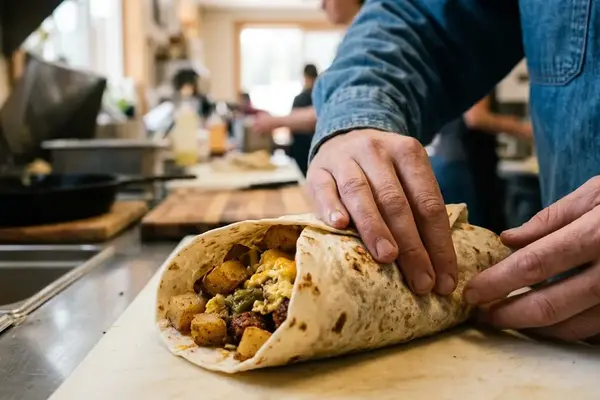
Building the taco follows a strict moisture-control order. Place 1 to 2 tablespoons of shredded cheese directly on the warm tortilla before adding the hot fillings. The cheese melts into a thin fat-and-protein barrier that slows chile moisture from soaking the tortilla.
Keep the wet chile sauce near the centerline of the filling and leave a 1-inch border at the tortilla edges to reduce leakage when folding. Adding a full ladle of green chile directly onto the tortilla before the cheese turns the bottom gummy during a 30- to 60-minute carry. Similarly, wrapping a cold tortilla around hot potatoes and eggs leads to cracked edges even if the fillings are cooked perfectly.
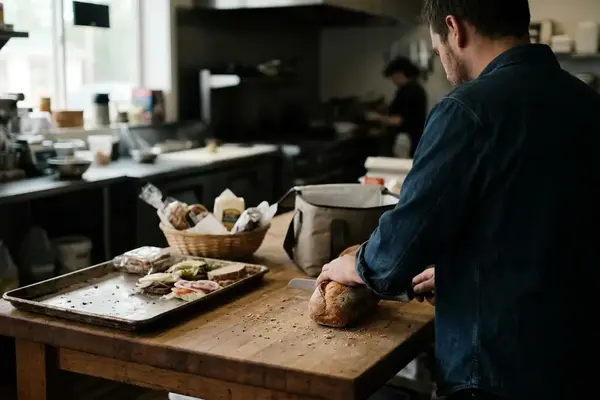
Wrap the assembled taco first in parchment or deli paper, then in foil. Crimp the side seams tightly and keep the seam side down in your pack. Finally, toast the foil-wrapped taco seam side down in a dry skillet for 60 to 90 seconds, then flip for another 45 to 60 seconds to set the folds and rewarm the tortilla.
Altitude Adjustments and Storage Limitations
Mountain cooking requires treating altitude changes as mandatory corrections rather than recipe suggestions. Water boils cooler at elevation, meaning potatoes need extra time. At roughly 5,000 feet, water boils near 202°F instead of 212°F. Near Breckenridge elevations around 9,600 feet, it boils near 194°F. Potato parboiling commonly needs an added 2 to 6 minutes depending on the cube size and potato variety.
For elevations above 5,000 feet, start checking your 1/2-inch potato cubes at 8 minutes of parboiling. Continue in 1-minute intervals until the edges yield to a fork but the centers are not falling apart. Roasting or skillet-crisping potatoes at altitude may need 3 to 7 additional minutes because parboiled potatoes can retain more surface moisture. You can review the official high altitude cooking adjustments for broader meal planning.
Federal food-safety guidance treats 40°F to 140°F as the danger zone. Hot foods carried for later eating should be kept above 140°F or eaten within 2 hours. This window shortens to 1 hour when the surrounding temperature is above 90°F. Pack fresh pico de gallo, crema, or salsa in a separate sealed container and add it at eating time. Diced tomato and onion can release liquid into a wrapped taco within 20 to 45 minutes.
Note: While these temperature guidelines provide a proven baseline for trail safety, individual pack insulation and ambient weather conditions will drastically alter actual cooling rates. Foil slows heat loss but does not make a taco shelf-stable.