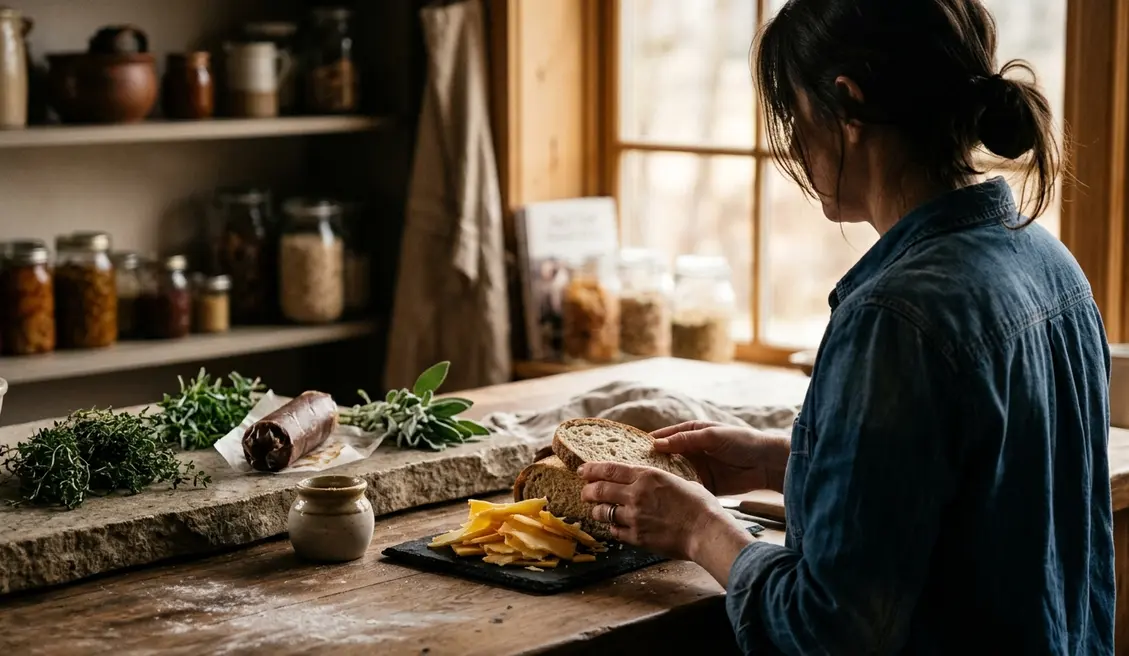
The Anatomy of an Artisan Grilled Cheese
The perfect grilled cheese is not a happy accident. It is a sequence of linked decisions. You need a bread sturdy enough to hold melted fat, a blend of cheeses chosen for both melt and flavor, and a single sweet or acidic accent to cut the richness. Upgrading from basic white bread to rustic, fermented loaves transforms the sandwich from a quick snack into a deliberate meal.
A practical artisan build relies on specific proportions. You need two slices of bread, two to three ounces of total cheese, and one to two teaspoons of a concentrated enhancer such as mustard, jam, or onion relish. Low-and-slow skillet cooking usually takes 6 to 10 minutes total, with the first side cooked for 3 to 5 minutes and the second side for 3 to 5 minutes. Balancing high-moisture melting cheeses with aged, flavor-dense varieties ensures the center flows smoothly while delivering complex savory notes.
Selecting the Perfect Bread Foundation
Bread selection starts with structure, not flavor alone. The loaf needs enough chew to resist steam from the melting cheese, but enough softness in the crumb for heat to move inward efficiently.
Cut rustic sourdough or naturally leavened country bread into slices 1/2 to 3/4 inch thick. Thinner slices scorch quickly in the pan. Thicker slices insulate the center too much, leaving the cheese under-melted by the time the crust browns. For the best cheese retention, choose a medium-open crumb with small, irregular holes rather than a ciabatta-style open crumb. Large holes simply allow the melting cheese to escape and burn against the skillet.
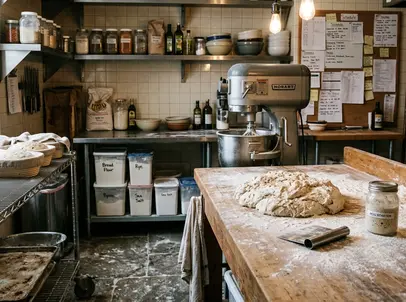
Naturally leavened sourdough typically develops noticeable acidity after a 12 to 24 hour fermentation window. This acidity provides a necessary flavor contrast to rich cheeses like Gruyère, Raclette, or cheddar. The tang of the bread cuts through the heavy butterfat, keeping each bite appetizing rather than overwhelming.
The Cheese Matrix: Melting vs. Flavor
The cheese decision happens in two distinct layers. First, pick a reliable melter to create stretch and flow. Then, add a smaller amount of aged cheese for sharpness, nuttiness, or salt. Relying on a single block rarely achieves both optimal texture and deep flavor.
A proven ratio uses roughly 1 1/2 to 2 ounces of a high-moisture melting cheese, such as Raclette, young Gouda, fontina-style cheese, or Gruyère. Pair this with 1/2 to 1 ounce of a sharper aged cheddar or a similar flavor-dense cheese. Freshly grating the cheese is non-negotiable for a smooth texture. Pre-shredded cheeses commonly contain anti-caking starches or cellulose, which can slow smooth melting and leave a drier texture compared with hand-grated cheese.
For a deeper understanding of how casein protein structure and melting properties interact under heat, regional dairy research provides excellent technical background. Once grated, spread the cheese in an even layer no thicker than 1/2 inch before cooking so the center can soften completely during the 6 to 10 minute skillet window.
Gourmet Add-Ins and Flavor Enhancers
Add-ins are chosen after the cheese blend because their primary job is to correct balance. Acidity cuts fat, sweetness rounds out salt, and cured meat adds savory depth. The build should use one dominant accent rather than a chaotic mix of ingredients competing for attention.
Use 1 to 2 teaspoons of whole grain mustard, pickled onions, fig jam, or apple butter per sandwich. Larger amounts can make the bread slide apart or steam from the inside out. If you want to introduce sweetness through caramelized apples, cook thin slices over medium-low heat for 8 to 12 minutes until softened and lightly browned before adding them to the sandwich.
Quick Tip: Prosciutto or another thin cured meat should be limited to 1 to 2 slices. This adds salt and umami without preventing the cheese from bonding the bread layers together.
The Cooking Technique: Achieving the Golden Crust
The cooking method is set up to synchronize two outcomes: browning the exterior and melting the center. Cook the sandwich in a heavy skillet over low to medium-low heat. If you are using an infrared thermometer, look for roughly 275 to 325 degrees Fahrenheit at the pan surface.
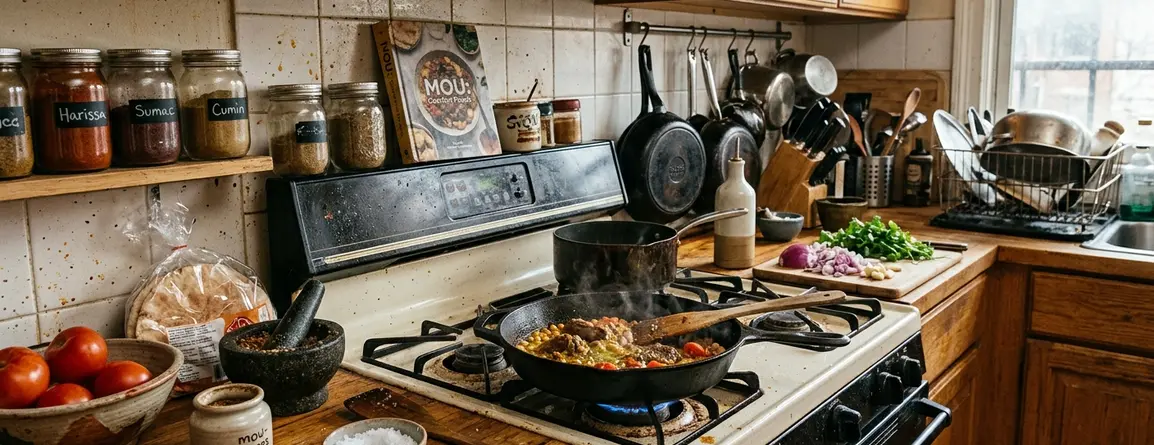
Spread 1 to 2 teaspoons of softened butter or mayonnaise across the outside of each bread slice. A thin, edge-to-edge layer browns more evenly than scattered pats of fat. The mayonnaise versus butter debate often comes down to preference, but both provide the necessary lipid layer for a crisp exterior.
Cover the pan with a lid for 1 to 2 minutes during the middle of cooking, or press lightly with a cast-iron press for 30 to 60 seconds at a time. This encourages even melting without crushing the crumb. Finally, rest the finished sandwich on a cutting board or rack for 1 to 2 minutes before slicing. This brief resting period allows the cheese to thicken slightly instead of running out immediately onto the plate.
When to Keep It Simple: Scope and Limitations
Scope decisions are made by matching the sandwich to the occasion. Imported alpine cheeses and fermented loaves fit a deliberate dinner-style grilled cheese. However, a fast lunch, a kids' meal, or a nostalgic craving often calls for a simpler approach.
Highly aged cheeses such as 5-year Gouda or very aged cheddar have lower moisture and firmer protein structure. They perform better as a flavor accent than as the main melting cheese. A failure case I see often is a sandwich made with 3/4 inch sourdough slices, only 5-year Gouda, and high heat. It browns on the outside while the center stays stiff because the cheese lacks enough moisture to melt before the bread scorches. If using a very aged cheese, keep it to 1/2 to 1 ounce and pair it with 1 1/2 to 2 ounces of a younger, higher-moisture cheese.
A basic version can still be technically sound with 2 slices of sandwich bread, 2 slices of American-style cheese, and a 4 to 6 minute cook time over medium-low heat. While our testing focuses on standard kitchen settings, high-altitude variables like rapid moisture loss require slight timing adjustments.
Note: At mountain elevations such as Breckenridge, dry bread can stale faster and pans may behave differently on rental-home stovetops. Visual cues matter more than the clock: the bread should be evenly golden and the cheese visibly softened at the edges before flipping or serving.
Summary: Artisan Grilled Cheese Build Checklist
- Slice rustic sourdough or country bread 1/2 to 3/4 inch thick.
- Grate 2 to 3 ounces total cheese per sandwich, combining a melter with a sharper aged cheese.
- Add only 1 to 2 teaspoons of jam, mustard, pickled onions, or other wet ingredients.