Key Takeaways: Mastering Winter Comfort Food
Whether you are coming off the mountain after a long day of skiing or simply craving a taste of globally inspired comfort, winter cooking requires a shift in how we build flavor. The cold months demand dishes that warm you from the inside out. I organize winter comfort food around three repeatable decisions. First, you choose a warming base, such as a rich broth or a concentrated braising liquid. Next, you add a starch or a slow-cooked protein for substance. Finally, you finish with a volatile accent to wake up the palate.
Timing is the invisible ingredient in this framework. A mountain-style ramen requires a broth window of 6 to 8 hours for poultry bones, or 10 to 14 hours for beef or pork bones if you want a collagen-rich texture. Braised short ribs typically need 2.5 to 3.5 hours in a 300 to 325°F oven after searing and deglazing. You must hold back your finishing accents until the final 1 to 5 minutes before serving. Fresh herbs, chili oil, citrus zest, and scallions remain aromatic rather than cooking flat when added at the very end.
Summary: Successful winter cooking relies on layering deep, slow-cooked foundations with bright, last-minute finishes to create a balanced, warming meal.
The Core Elements of Global Comfort Food
The flavor framework for cold-weather dishes starts with umami, heat, and richness. These three elements explain why certain meals feel universally satisfying across different cuisines. Umami provides a savory backbone, usually extracted from bones, mushrooms, or seaweed. Richness coats the tongue and carries fat-soluble flavors, while heat cuts through that heaviness to keep the dish engaging.
For a broth-based dish, a proven seasoning order maximizes these elements. You build aromatics first, establish the umami base second, add salt-bearing ingredients third, and apply volatile finishes last. This sequence ensures that delicate flavors are not destroyed by prolonged heat.
High-altitude environments fundamentally change how these elements come together. At the Breckenridge town elevation, roughly 9,600 feet above sea level, water boils near 194°F rather than 212°F. This lower boiling point slows starch hydration and extends braising times compared with sea-level kitchens. Tough cuts such as short ribs, shank, oxtail, and pork shoulder benefit from 2 to 4 hours of moist heat because collagen conversion takes sustained time below a hard boil.
Essential Pantry Staples for Winter Cooking
I build my winter pantry by function rather than cuisine label. You need ingredients that deliver specific impacts: licorice-like warmth, woodsmoke depth, or citrusy lift. Star anise is ideal for that warming, slightly sweet background note. You should steep whole star anise in broth or braising liquid for 20 to 45 minutes, then remove it before serving to avoid a medicinal edge.
Smoked paprika provides woodsmoke depth without requiring a smoker. To activate its flavor, bloom the paprika in fat for 30 to 60 seconds over medium heat before adding any liquid. Longer high-heat exposure can turn the spice bitter. Cardamom offers a bright, citrusy lift that cuts through heavy braises.
Quick Tip: Ground spices lose aroma faster than whole spices. Buy ground smoked paprika or cardamom in quantities that you can use within 3 to 6 months after opening.
Beyond spices, a resilient winter kitchen relies on hardy vegetables. Carrots, daikon, parsnips, turnips, rutabaga, cabbage, kale, collards, and leeks form the backbone of many global comfort dishes. Most of these can be held refrigerated for about 5 to 14 days, depending on their cut condition and moisture levels.
Step-by-Step: Crafting a Mountain-Style Ramen
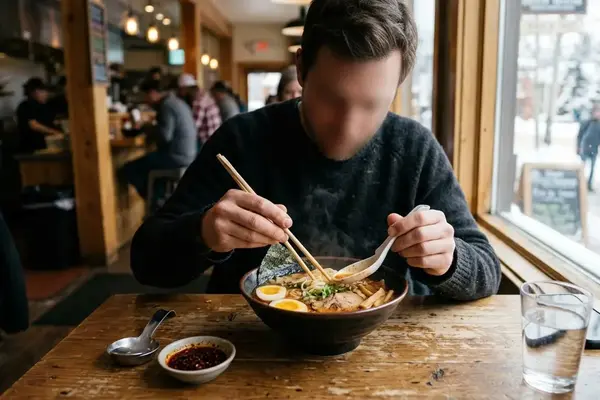
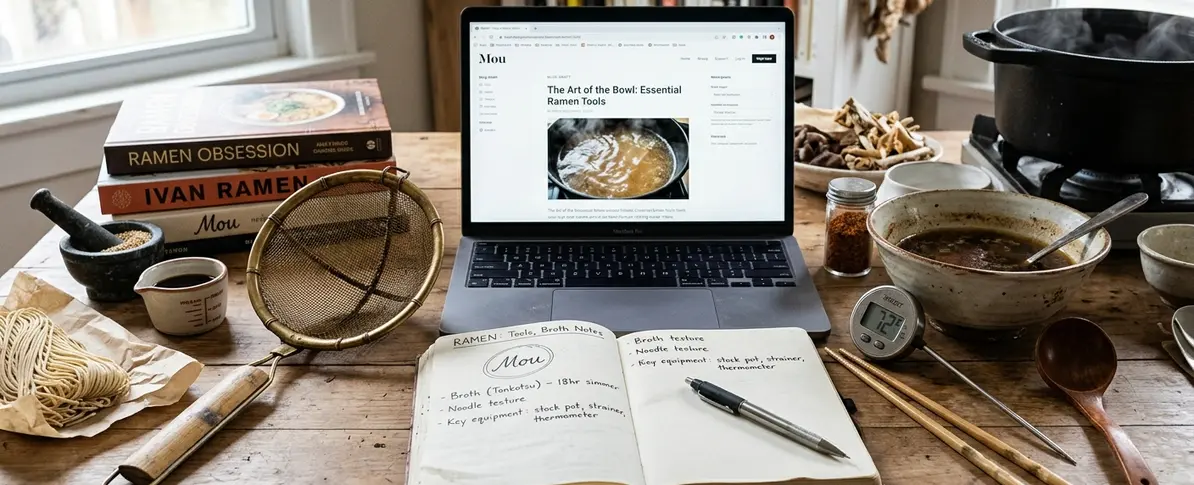
Building a bowl of ramen is an exercise in component control. You prepare the broth for body, the tare for salt and identity, the noodles for texture, the protein for substance, and the garnishes for contrast. Keeping these elements separate until the final moment guarantees a vibrant, textured meal.
Start by roasting your bones at 425°F for 35 to 50 minutes before simmering if you want a darker, toastier broth. Transfer the bones to a large pot and simmer at a bare tremble—not a rolling boil. Skim the foam during the first 30 to 45 minutes to keep the liquid clear. Let poultry bones go for 6 to 8 hours, or push beef and pork bones to 10 to 14 hours.
While the broth simmers, mix your tare. A workable tare ratio for four bowls is a half cup of soy sauce, 2 tablespoons of miso, 1 tablespoon of mirin or rice vinegar, 1 to 2 teaspoons of grated ginger, and 1 teaspoon of chili paste. Use 1 to 2 tablespoons of this tare per bowl before adding the hot broth.
Note: Adding miso or chili paste directly to a dry, hot pot can scorch it within seconds, producing bitterness instead of umami. Always whisk fermented pastes into warm liquid off a hard boil.
Cook your ramen noodles separately for 2 to 4 minutes depending on thickness. Drain them immediately so excess starch does not cloud your carefully crafted serving broth.
Step-by-Step: Braised Short Ribs with Global Spices
A great braise begins with aggressive surface browning. The crust sets the base flavor before any liquid is introduced. Pat the short ribs dry and season them 30 to 60 minutes before searing. This resting period reduces surface moisture and gives the salt time to penetrate the outer layer of the meat.
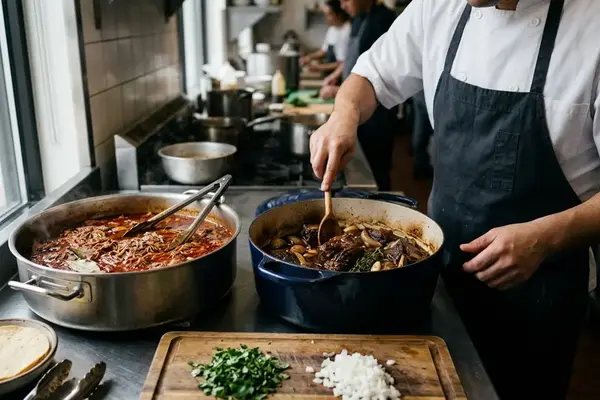
Sear the ribs in a heavy pot over medium-high heat for 3 to 5 minutes per broad side. Crowding the pot causes steaming, so leave visible space between the pieces. Once browned, remove the meat and deglaze the pan to capture the browned fond. Cook your aromatics and spices in the residual fat before returning the meat to the pot.
Long-term experience revealed that fully submerging short ribs in liquid dilutes the browned crust and produces a boiled-meat flavor rather than a concentrated braise. Use enough braising liquid to come one-half to two-thirds of the way up the meat. The exposed top will retain its roasted character.
Braise the ribs covered at 300 to 325°F for 2.5 to 3.5 hours. Check for tenderness after the 2-hour mark using a skewer or fork. For detailed safety parameters regarding internal temperatures, consult the USDA guidelines for safe beef preparation.
Scope and Limitations of Ingredient Substitutions
Improvisation is a necessary skill in winter cooking, but you must make substitution decisions by matching ingredient function first. Ask yourself what the missing item provides: salinity, acidity, sweetness, smoke, heat, fat, or fermentation. A spice can be swapped when it plays the same role in the dish.
Environmental factors also dictate how you adapt recipes. At approximately 9,600 feet elevation, simmering and braising often require an added 15 to 30 minutes of checking time compared with a sea-level version of the same recipe. Ramen noodles that cook in 2 minutes at sea level may need a longer texture check in a high-altitude kitchen because the boiling point is lower.
While these altitude adjustments reflect extensive testing in high-elevation kitchens, atmospheric pressure variations mean exact cooking times will always require sensory verification at the stove. At sea level, use the lower end of the time ranges first and extend only after a tenderness check.
Plating and Presentation for Winter Dining
The serving plan for winter comfort food prioritizes heat retention above all else. A steaming bowl of ramen or a rich braise loses its appeal quickly if served on cold ceramic. Warm your heavy bowls or shallow braising plates in a 170 to 200°F oven for 10 to 15 minutes. Alternatively, fill the bowls with hot water for 3 to 5 minutes and dry them thoroughly before plating.
For ramen, place the tare in the warm bowl first. Add 10 to 12 ounces of hot broth, then loosen the cooked noodles into the liquid. Arrange your protein and garnishes quickly, aiming to serve within 2 to 4 minutes of assembly.
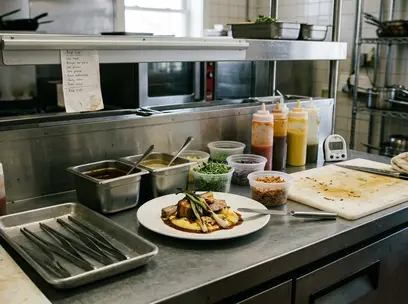
For braised short ribs, let the meat rest in the warm braising liquid for 10 to 20 minutes before plating. This resting period allows the meat fibers to relax and gives you time to skim or reduce the sauce. Finish dark braises with bright herbs, pickles, or sesame seeds to provide visual contrast and a final hit of acidity.