Bringing the Night Market to Your Kitchen
Street food works at home when the dish has one clear engine: char, braise, sauce, griddle, or dough.
This list takes that route through five globally inspired comfort foods: elotes, pork belly bao buns, currywurst, okonomiyaki, and arepas. Each one gives a regular dinner a little night-market energy without asking you to buy a cart, a commercial fryer, or a pantry full of ingredients you will never touch again.
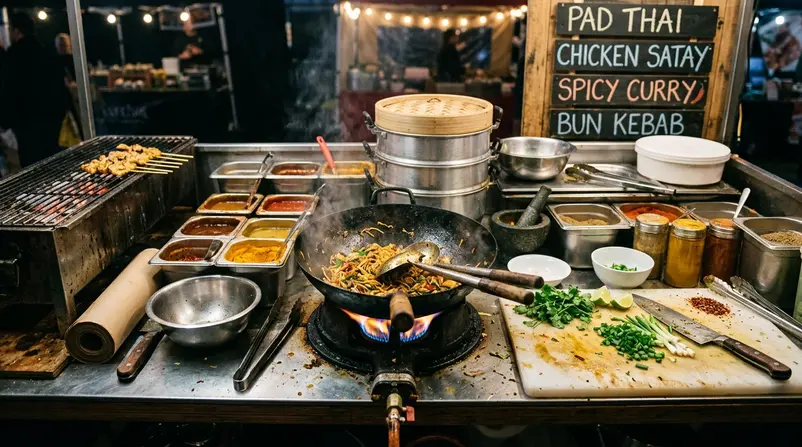
I like this group because the payoff comes from technique, not complication. Elotes teach fast charring and last-minute dressing. Bao rewards patience because the pork belly can braise ahead. Currywurst turns a skillet sausage into something sharper with spiced ketchup. Okonomiyaki asks you to judge batter and browning, while arepas bring the pleasure of shaping warm corn dough by hand.
Summary:
- Beginner-friendly: Elotes and currywurst. Elotes can go from raw corn to dressed serving in 20–30 minutes with a hot grill, broiler, or cast-iron skillet. Currywurst fits a weeknight with 10–14 minutes for pan-frying sausages and 8–12 minutes for the sauce.
- Intermediate: Okonomiyaki and arepas. Okonomiyaki generally needs 15–20 minutes of prep and 12–18 minutes on a griddle or skillet for two medium pancakes. Arepa dough rests for 5–10 minutes after mixing so the cornmeal hydrates before shaping.
- Make-ahead project: Pork belly bao. Plan 20–30 minutes of prep, 2–3 hours of braising, and 10–15 minutes to steam buns and assemble.
- Primary flavor profiles: Chile-lime cream, soy-sugar braise, curry ketchup, sweet-savory griddle sauce, and salted corn masa.
Criteria for Selection
The dishes had to pass two practical tests before they made the list: the ingredients needed to be realistic to source, and the cooking method needed to fit a normal home kitchen.
For the ingredient test, I looked for recipes built around supermarket staples such as corn, mayonnaise or crema, cabbage, eggs, bratwurst-style sausage, canned tomato products, precooked cornmeal, scallions, and black beans. The specialty items still needed to be reachable at Latin, Asian, or international grocers: cotija, frozen or refrigerated bao buns, pork belly, Japanese-style mayonnaise, okonomiyaki sauce ingredients, and dried chiles or chile powder.
The equipment test mattered just as much. A dish stayed in contention only if a 10–12 inch cast-iron skillet, grill pan, saucepan, steamer basket or bamboo steamer, mixing bowl, spatula, and instant-read thermometer could get the job done.
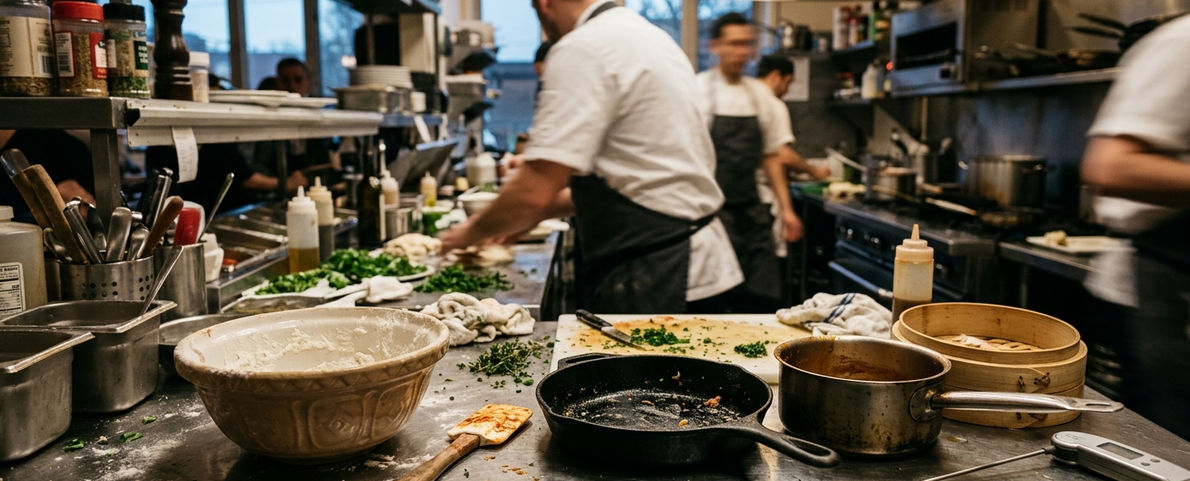
The last filter was flavor-to-effort. Each dish needed one concentrated flavor component that carries the plate: chile-lime crema for elotes, soy-sugar braising liquid for bao, curry ketchup for currywurst, sweet-savory sauce for okonomiyaki, and salted corn masa for arepas. Four of the five can be cooked and served within a 30–60 minute window. Pork belly bao earns its spot as the exception because the braise needs 2–3 hours to turn tender.
Quick Tip: If you want the easiest first night, buy only one specialty item. Cotija for elotes or bratwurst for currywurst gives you a clear flavor shift without changing how your kitchen works.
The Top 5 Global Street Foods
1. Elotes (Mexican Street Corn)
Elotes are the fastest way to make dinner feel less like a routine. The key is patchy blistering, not full blackening.
Char whole corn over medium-high grill heat or in a dry cast-iron skillet for 8–12 minutes, turning every 2–3 minutes until the kernels blister in spots. Under a broiler, corn can char faster on the exposed side, so turn it every 1–2 minutes rather than trusting a fixed total cook time.
Dress the corn immediately before serving. Use crema or mayonnaise as the creamy base, then finish with crumbled cotija, chile powder, lime juice, and chopped cilantro. If the cheese sits on hot corn too long, it softens into the sauce and you lose the salty crumb that makes each bite pop.
2. Pork Belly Bao Buns (Taiwanese)
Pork belly bao is the long, generous build in this lineup. It does not need hard restaurant technique, but it does need time.
Cut pork belly into 1–2 inch pieces, sear until browned, then braise with soy sauce, sugar, ginger, garlic, scallion, and liquid for 2–3 hours. The pork is ready when a skewer slides through with little resistance. That texture matters more than the clock because pork belly carries different proportions of fat and lean from slab to slab.
For assembly, steam prepared buns for 8–10 minutes from refrigerated or thawed. Fill while warm with pork belly, pickled cucumber or quick-pickled vegetables, herbs, and a spoonful of reduced braising liquid. Store-bought buns are not a shortcut I apologize for; they keep the project focused on the braise, which is where the dish gets its depth.
3. Currywurst (German)
Currywurst lives or dies by the sauce and the sausage snap. The sauce should taste like ketchup that took a darker turn: tomato, curry spice, tang, and a little sweetness working together.
Brown bratwurst-style sausages in a lightly oiled skillet over medium heat for 10–14 minutes, rotating often, until the casing firms and the center reaches 160°F. High heat can split the casing before the center finishes, leaving you with a burnt exterior and an undercooked middle. Medium heat gives the casing time to tighten and brown.
For the sauce, simmer the curry-ketchup base for 8–12 minutes. That short simmer takes the raw edge off the spices and gives the sauce enough body to cling after you slice the sausage. Serve with extra curry powder over the top if you want the street-cart hit right at the nose.
4. Okonomiyaki (Japanese Savory Pancake)
Okonomiyaki asks for attention at the bowl and the skillet. The batter should bind the cabbage, not bury it.
Plan 15–20 minutes for prep and 12–18 minutes of griddle or skillet cooking for two medium pancakes. Cabbage, eggs, scallions, and a savory sauce do most of the work. If bottled okonomiyaki sauce is unavailable, mix a home version from ketchup, Worcestershire-style sauce, soy sauce, and a sweetener, then adjust for salt and tang.
Japanese-style mayonnaise gives the finish a rounder sweetness. If you cannot find it, standard mayonnaise mixed with a small amount of rice vinegar and sugar moves in the right direction without turning the dish into a scavenger hunt.
5. Arepas (Venezuelan and Colombian Corn Cakes)
Arepas are simple, but they are not casual about cornmeal. Use precooked cornmeal labeled for arepas or masarepa.
Regular dry cornmeal can leave the dough gritty and prone to cracking because it does not hydrate the same way. Masa harina for tortillas also behaves differently and can produce a denser patty than you want here.
After mixing, let the dough rest for 5–10 minutes so the precooked cornmeal hydrates. Shape, brown, and fill with black beans, cheese, or whatever warm, saucy filling fits the meal. The pleasure is in the contrast: crisped surfaces, soft corn interior, and a filling that makes the whole thing eat like handheld comfort.
Sourcing Limitations and Authentic Adaptations
Home cooking can capture the core logic of street food: charred corn, braised pork, spiced sausage sauce, griddled batter, and hydrated corn dough. It cannot duplicate every vendor’s spice blend, local corn variety, cart griddle seasoning, or regional service style.
That boundary is useful. It keeps the goal honest. These versions aim for the flavor structure and eating experience, not a claim of exact reproduction.
- Elotes: Replace cotija with a feta-style crumbly cheese if needed. Replace crema with sour cream thinned with lime juice.
- Bao: Frozen or refrigerated steamed buns save roughly 1.5–2.5 hours of mixing, proofing, shaping, and steaming work when homemade yeast dough would push the project too far for one meal.
- Okonomiyaki: A sauce made from ketchup, Worcestershire-style sauce, soy sauce, and a sweetener gives you a practical home base when bottled sauce is unavailable.
- Arepas: Buy masarepa or precooked cornmeal labeled for arepas. Standard cornmeal and masa harina hydrate differently.
Note: Treat street-vendor inspiration with home-kitchen food safety. Keep raw pork belly refrigerated at 40°F or below, do not reuse raw-meat marinades unless boiled, and reheat braised pork until steaming hot throughout. For sausage and other proteins, use an instant-read thermometer and follow the USDA safe minimum internal temperature guidelines.
Starting Your Culinary Adventure
Pick by confidence level, not by which dish sounds the most authentic.
If you want a fast win, start with elotes or currywurst. They require the fewest moving parts and can be completed in 20–45 minutes with one main pan or grill surface. If you want more hands-on cooking, move to okonomiyaki or arepas, where batter thickness, dough hydration, flipping, and browning become the fun part of the meal.
For a slower weekend plate, braise pork belly 1 day in advance. Refrigerate it in its cooking liquid, skim solidified fat if desired, and reheat gently for 15–25 minutes before filling bao. That small bit of planning turns the longest recipe into an easy assembly dinner.
To make the table feel more like Park & Main after a mountain day, set out sauces, lime wedges, pickles, herbs, cheese, and napkins before the hot food comes off the pan. Let people dress each item immediately. The mood changes when dinner lands in pieces instead of as one plated decision.
Quick Tip: Do your mise en place 20–40 minutes before cooking: grate cabbage, slice scallions, crumble cheese, mix sauces, and portion toppings. Street food feels fast because the vendor is ready before the order starts.