Executive Summary: Dining Above the Clouds
Breckenridge makes hunger feel different. A breakfast burrito before rentals, a bowl of chili after a windy lift ride, dumplings at après, a flatbread carried back to the condo — each meal has a job to do.
The town core and base-area dining sit around 9,600 feet in elevation, while nearby ski terrain rises to just under 13,000 feet. That changes the way I read a menu. Warmth matters. Hydration matters. So does food that lands with enough starch, fat, and protein to steady a tired skier without turning dinner into a nap.
Summary: Use this guide by eating occasion, not by strict ranking.
- Hearty mountain classics: stews, braises, baked pastas, chili, pot pie, and roasted sides for full recovery meals.
- Globally inspired après-ski plates: dumplings, raclette-style cheese, curry fries, bao-style buns, and spiced wings built for sharing.
- Elevated grab-and-go meals: tacos, tortas, banh-mi-inspired sandwiches, flatbreads, and handheld pies near base areas or Main Street.
- Early breakfast fuel: burritos, pastries, green-chile plates, sturdy sandwiches, and local coffee before lift plans start moving.
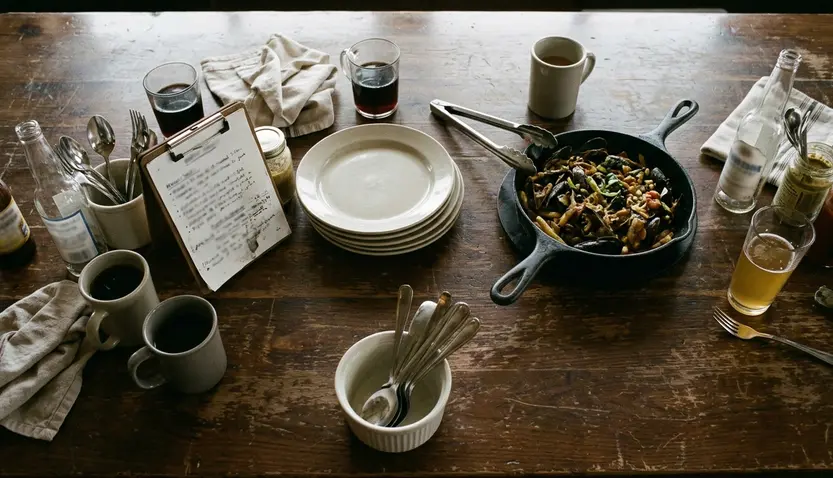
Peak winter dining pressure usually hits from mid-December through early January, then again from late February through late March. Those weeks bring ski travel, school breaks, après-ski crowds, and cold-weather appetites into the same small dining windows. If you want a sit-down dinner, treat the reservation as part of the ski plan.
Still, the town rewards curiosity. Breckenridge can give you a crock of melted cheese, a plate of braised short rib, a stack of breakfast tacos, or a pastry and coffee that saves a rushed morning. The trick is matching the meal to the moment.
What's Inside
- Our Criteria for Selection
- High-Altitude Comfort Classics
- Globally Inspired Après-Ski Bites
- Elevated Street-Style Eats
- Cozy Mountain Breakfast Spots
- Dining at Elevation: Scope & Limitations
Our Criteria for Selection
I weigh Breckenridge restaurants less like a novelty hunt and more like a field test: what will actually help a visitor eat well before, during, or after a mountain day? My practical review lens looks at value, warmth, service flow, and flavor in the same pass, because a clever menu loses points fast when it cannot handle boot traffic or a 5:15 p.m. rush.
For location, I use three proximity bands:
- Base-area or lift-adjacent: best for quick recovery food, après-ski plates, and groups that do not want to cross town in ski gear.
- Main Street walkable: useful for dinners, bar seating, and visitors staying in the central lodging corridor.
- Short shuttle or rideshare distance: worth considering when the menu offers stronger comfort anchors or a calmer room.
For winter usefulness, I give extra weight to indoor seating, hot entrées, soup or stew options, shareable small plates, and service models that can handle arrivals between roughly 3:00 p.m. and 6:30 p.m. A restaurant does not need every feature. It does need a clear reason to fit the rhythm of a ski day.
The culinary bar is specific. I look for at least one comfort-food anchor that tells me the kitchen understands the assignment: braised meat, baked pasta, dumplings, tacos, flatbreads, breakfast burritos, pastries, or locally roasted coffee. This lens fits central Breckenridge eating patterns, not every cabin-road itinerary.
Note: Calling a place a top après-ski option without checking whether it serves food between roughly 3:00 p.m. and 6:00 p.m. can mislead readers. Some kitchens pause between lunch and dinner, and shoulder-season menus may shrink without much notice.
Where to Settle In After the Mountain
-
1. High-Altitude Comfort Classics
For the coldest ski days, I want a sit-down room with hot plates, hooks for coats, and entrées that arrive steaming instead of lukewarm. This is where tavern-style dining and mountain comfort restaurants earn their keep.
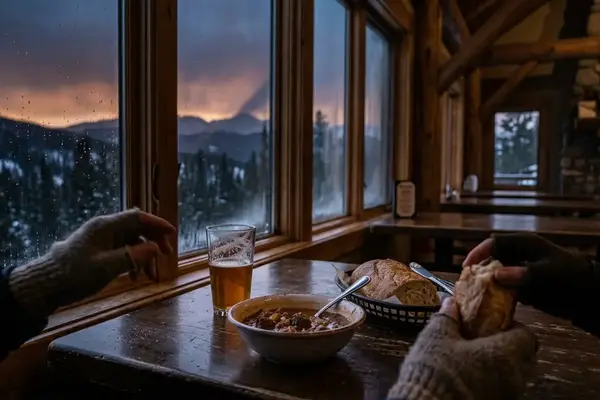
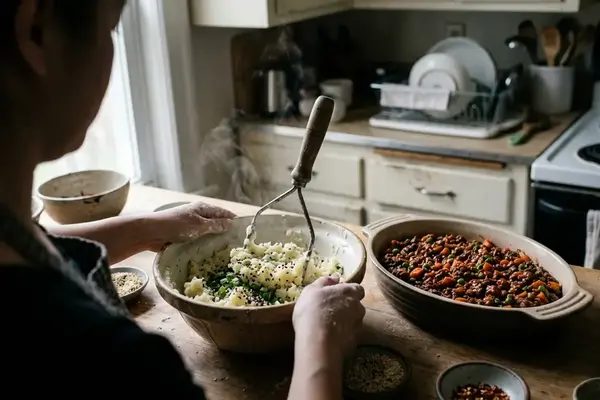
Look for beef or lamb stew, short-rib plates, chicken pot pie, baked ziti, lasagna, macaroni-and-cheese variations, chili, and roasted root-vegetable sides. Those dishes carry the satiety trifecta: starch, fat, and protein. After hours of skiing or snowboarding, that matters more than a delicate plate that disappears in four bites.
The strongest window for this category runs from roughly 4:00 p.m. to 8:30 p.m. Earlier, many diners still want snacks and drinks. Later, fatigue takes over, especially for families or groups with early lessons the next morning.
Comfort-classic spots near Main Street and the base corridors work best when they make the physical experience easy. Boot-friendly entry, bar seating for smaller parties, coat hooks, and a room that feels warm as soon as the door opens all count. A short-rib plate can taste richer when nobody has to wrestle a wet jacket over the back of a chair.
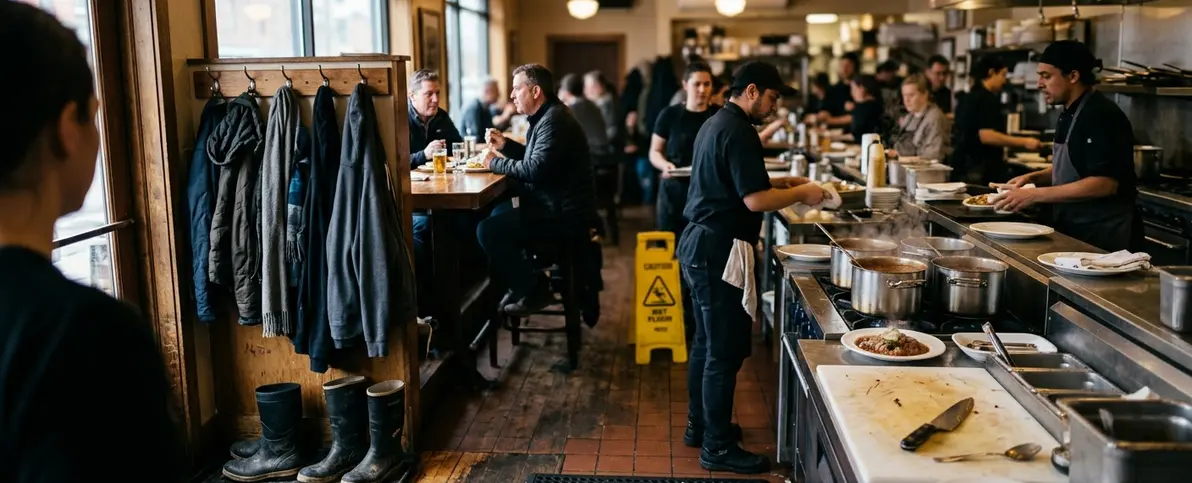
Quick Tip: If two menus look similar, choose the one with a soup, stew, chili, or braise. Those items tend to hold heat better during busy service.
Where Après-Ski Gets More Interesting
-
2. Globally Inspired Après-Ski Bites
Après-ski does not have to mean only nachos and wings, though both can be excellent when the kitchen pays attention. Breckenridge is at its most fun when comfort food crosses into global flavor: salty, warm, shareable plates with enough personality to wake up a tired table.
Strong fits include dumplings, bao-style buns, noodle bowls, curry fries, raclette-inspired cheese plates, alpine-style sausages, fondue-style starters, tacos with Korean or Thai-influenced fillings, and spiced wings. These are not formal tasting-menu dishes. They work because everyone can reach in, trade bites, and keep the conversation moving while snow gear piles under the table.
Après demand usually concentrates between roughly 3:00 p.m. and 6:00 p.m. during the winter lift season, especially around base areas and the Main Street corridor. A restaurant that handles that window well needs more than a clever snack list. It needs pacing, enough staff coverage, and beverages that do not fight the food.
Pair fried or salty plates with Colorado-style amber or pale ales. Crisp lagers cut through cheese-heavy raclette or fondue-style starters. Ginger-, citrus-, or chile-forward cocktails make sense with dumplings, bao, and Asian-fusion snacks because they sharpen the edges instead of burying them.
Where Fast Food Still Feels Crafted
-
3. Elevated Street-Style Eats
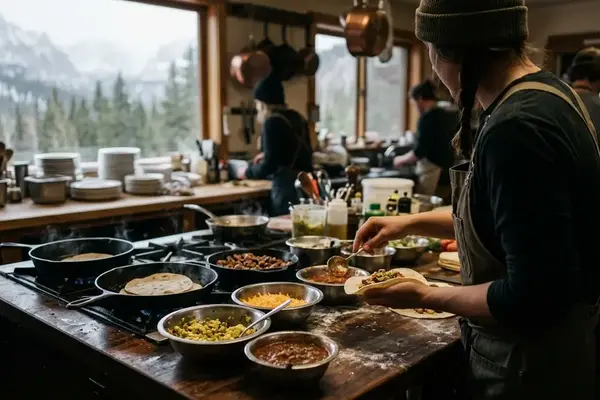
This is the casual counterweight to the heavy comfort meal. Street-style dining earns a place in a Breckenridge guide only when it shows intent through house sauces, careful tortillas, sturdy bread, smart fillings, or takeout packaging that survives a cold walk.
Useful examples include gourmet tacos, loaded nachos, tortas, banh-mi-inspired sandwiches, flatbreads, handheld pies, falafel wraps, and grilled-cheese or fried-chicken sandwiches with house condiments. The category should feel quick, not careless.
The most useful ordering windows are lunch from roughly 11:30 a.m. to 1:30 p.m. and early evening from roughly 5:00 p.m. to 7:00 p.m. Those periods catch visitors who want food without committing to a long reservation-based meal. They also serve the group where one person wants a full plate, another wants something portable, and nobody wants to negotiate a two-hour dinner.
For base-area usefulness, compact menus help. They reduce decision time when gloves are off, kids are hungry, and the shuttle clock is suddenly relevant. I also favor items that can be eaten neatly in a few minutes: wrapped tacos, pressed sandwiches, flatbreads cut properly, and boxes that do not collapse the moment they meet steam.
A heavy baked pasta or braised-meat dinner may be exactly right after a cold full-day ski session. That same dish can feel like too much for a summer hiker eating at altitude before an evening drive. Street-style meals give you a lighter lever to pull.
Where the Day Starts Before the Lifts
-
4. Cozy Mountain Breakfast Spots
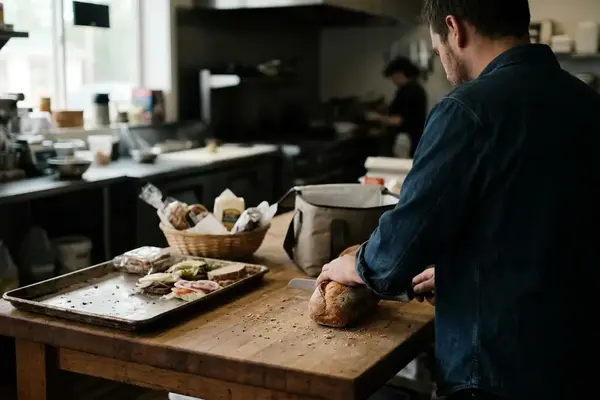
Breakfast in Breckenridge is logistics with a better smell. The meal has to arrive early enough for first-lift plans, sturdy enough to prevent a mid-morning crash, and portable enough for anyone juggling rentals, lessons, shuttle transfers, or a sleepy group still finding gloves.
The most practical breakfast window for skiers runs from roughly 7:00 a.m. to 9:00 a.m. Diners handling rentals or lessons often need food closer to the early side of that range. That is where online ordering, grab-and-go pastry cases, insulated coffee service, and tightly wrapped burritos become more than conveniences.
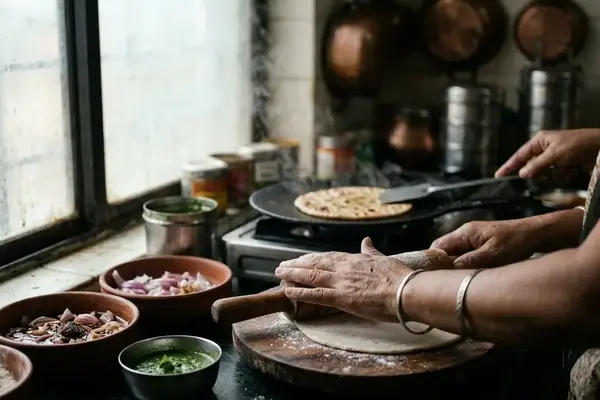
Target egg-and-potato burritos, green-chile breakfast plates, oatmeal with nuts or fruit, breakfast sandwiches on sturdy rolls, cinnamon rolls, croissants, scones, and espresso drinks or drip coffee from local roasters. I like a breakfast burrito with enough potato to hold heat and enough green chile to feel like breakfast in the Rockies, not airport food in foil.
Pastries have their own role. A croissant or scone will not carry the same weight as eggs and potatoes, but it can rescue a short morning when paired with coffee and a later lunch plan. For groups, mixing one pastry stop with one burrito stop often works better than forcing everyone into a full-service breakfast.
Dining at Elevation: Scope & Limitations
Breckenridge dining changes with weather, staffing, ingredient deliveries, tourism surges, and the shoulder-season reset. Treat any restaurant plan as current only after you check hours, menus, and reservation availability close to your trip.
At roughly 9,600 feet, water boils at a lower temperature than at sea level. Kitchens may need longer cook times for beans, grains, pasta, braises, and baked goods, and experienced mountain teams account for that in prep schedules. For home cooks or travelers curious about the mechanics, the U.S. Food Safety and Inspection Service offers helpful high-altitude food preparation guidelines.
Menu shifts are most likely during shoulder-season transitions, commonly April to May and October to November. Some dining rooms reduce hours, close temporarily, or change menus before winter or summer demand returns. A favorite raclette-style starter in March may disappear by May, and a breakfast counter with long winter hours may tighten its schedule in late fall.
For peak periods, check reservations before arrival for sit-down dinners, especially from mid-December through early January, late February through late March, and late June through August. Visitors staying near the town core, shuttle-served lodging, or ski base areas can use this guide most directly. Travelers lodging farther out may need to put parking, transit timing, or takeout durability ahead of ambiance.
The best Breckenridge meal is not always the fanciest one. It is the one that fits the altitude, the weather, the hour, and the appetite you actually have when you walk in from the cold.