What's Inside
- How the bread, fat, protein, and pickles work together
- Why Vietnamese-style baguettes behave differently from dense sourdough
- How to stage đồ chua, herbs, pork, and pâté before service
- The assembly order that keeps the crust crisp
Executive Summary: The Banh Mi Blueprint
A strong banh mi does not start with meat. It starts with sequence.
I treat the sandwich as a moisture-control project with street-food flavor: pickle first, revive the bread close to service, then add fats and protein only when the sandwich is ready to eat. That order protects the crust and keeps the fillings lively instead of heavy.
The blueprint rests on four pillars: an airy baguette, rich fats from pâté and mayonnaise, a savory protein, and acidic crunch from đồ chua. Miss one pillar and the sandwich still tastes good, but it loses the snap that makes banh mi feel so immediate.
Summary: Stage đồ chua at least 1 hour before assembly, or refrigerate it for 12-24 hours when you want a sharper deli-style bite. Re-crisp the bread during the final 4-7 minutes, then fill and serve within 5-10 minutes.
For home cooking, a roll roughly 7-9 inches long gives the filling enough room without forcing you to compress the crumb into paste. That size also keeps each bite balanced: crust, fat, meat, pickle, herb, heat.
The Anatomy of a Traditional Banh Mi
French Structure, Vietnamese Direction
Banh mi carries its history in plain sight. The baguette and pâté point to French colonial influence, while cilantro, daikon, fish sauce, cucumber, and chile show Vietnamese ingenuity at work. The sandwich does not taste like a compromise. It tastes like a smart redesign.
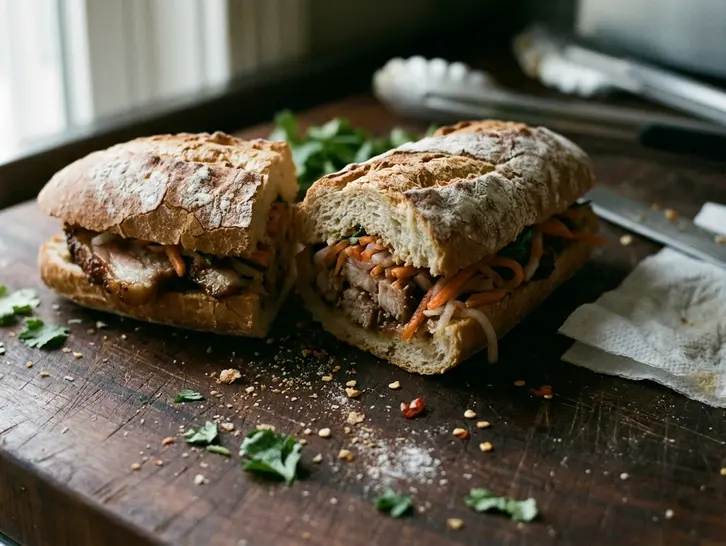
The bread gives shape. Pâté adds a deep liver note. Mayonnaise softens the crumb and spreads richness. Seasoned pork or chả lụa supplies the savory center. Pickled carrot and daikon cut through the fat, while cilantro and jalapeño lift the finish.
The Practical Flavor Ratio
A dependable home build starts with 1 split roll, 1-2 tablespoons pâté, 1 tablespoon mayonnaise, 2-3 ounces sliced or grilled protein, 4-6 cucumber spears, 2-3 tablespoons drained đồ chua, 4-6 cilantro sprigs, and 4-8 thin jalapeño slices.
That ratio matters because banh mi is not a stuffed sub. It is a layered sandwich where salty, sweet, sour, and spicy flavors take turns. Too much meat makes it dull. Too much pickle makes it sharp. Too much mayo mutes the herbs.
Texture Comes First
The crust should crack before the fillings move. Inside, the crumb should feel soft and light, not chewy or damp. Cucumber spears cut about 1/4 inch thick add snap without forcing the sandwich open, while drained pickles bring crunch without flooding the bread.
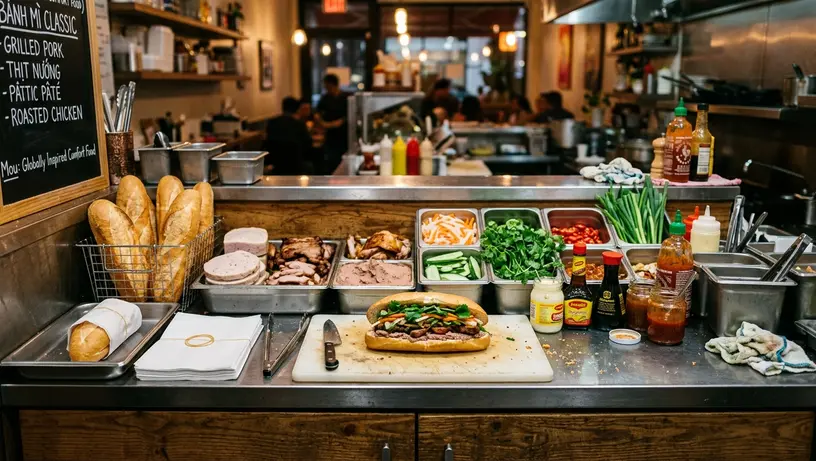
Sourcing and Preparing the Right Baguette
Choose by Feel, Not Label
The word baguette does not solve the bread problem. A dense, chewy French sourdough baguette fights the fillings and can pull meat, herbs, and pickles out with each bite. For banh mi, that toughness works against the sandwich.
Look for a Vietnamese-style baguette with a thin, crackly crust and a cotton-like, airy crumb. The roll should feel light for its size and crackle when squeezed gently. Avoid loaves with a thick, leathery crust, even if they look impressive in the bakery case.
Revive the Roll Near Service
Same-day rolls usually need only a short refresh. Warm them at 350-375°F for 4-6 minutes directly on the oven rack. That heat restores surface crunch without drying the inside into a shell.
If the roll softened overnight, mist the exterior lightly with water, then bake it at 350°F for 6-8 minutes. Rest it for 2 minutes before splitting so the crust settles and the crumb does not tear under the knife.
Quick Tip: Do not split the bread before reheating unless the roll is unusually thick. A whole roll protects its interior better and gives you a cleaner hinge for assembly.
Layering Richness: Proteins and Pâté
Cold-Cut Banh Mi Versus Grilled Pork
A chả lụa-based banh mi asks for precision more than cooking. Slice the cold cuts thinly, layer them evenly, and let the pâté, herbs, and pickles carry more of the flavor contrast. Because chả lụa has a milder profile than grilled pork, the supporting ingredients need to stay bright and clean.
Thịt nướng moves the sandwich in a warmer, more aromatic direction. The pork brings browned edges, garlic, shallot, fish sauce, and sweetness. It also demands tighter timing because hot meat can steam the bread if you pile it in straight from the pan.
Build the Marinade With Purpose
- Slice the pork thinly so it cooks quickly over high heat.
- Marinate it for 45 minutes to 8 hours with fish sauce, sugar or honey, minced garlic, shallot, black pepper, and a small amount of neutral oil.
- Cook the slices over high heat for 2-4 minutes per side, depending on thickness.
- Aim for browning at the edges rather than steaming in a crowded pan.
- Rest the cooked pork for 3-5 minutes before using 2-3 ounces per sandwich.
The rest period is small but useful. It gives the juices a moment to settle and keeps the sandwich from turning wet at the center.
The Fat Barrier
Pâté and mayonnaise do more than add richness. They create a protective layer between the bread and the wetter fillings. Spread 1-2 tablespoons pâté on the bottom interior of the roll and 1 tablespoon mayonnaise on the opposite side before adding meat.
Cultured mayonnaise works especially well because its tang echoes the pickles without becoming sour. Liver pâté gives the sandwich depth, so apply it confidently but not heavily. The goal is a rich foundation, not a paste that swallows the herbs.
The Acidic Crunch: Pickled Vegetables and Fresh Herbs
Make Đồ Chua Before Anything Else
Prepare the acidic crunch before the rich components. The vegetables need contact time to change texture, and the sandwich needs that sweet-sour pressure to cut through pâté, mayo, and pork.
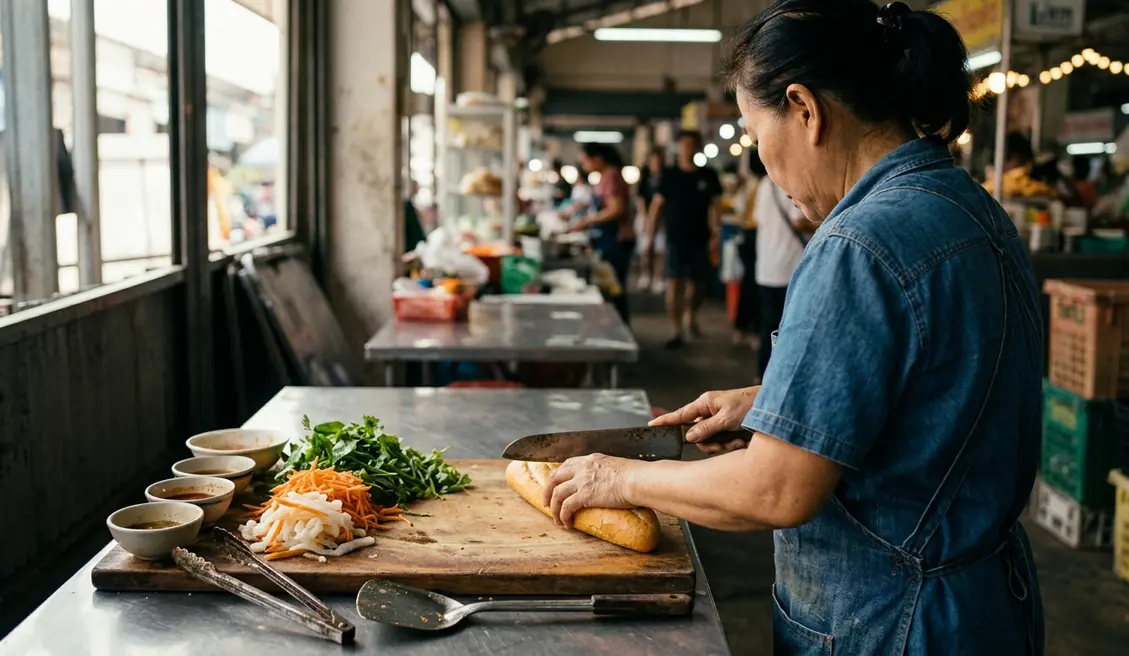
Cut carrot and daikon into matchsticks about 1/8 inch thick. Toss them with salt for 10-15 minutes, then rinse and drain before adding brine. This short salting step pulls out harshness and helps the vegetables bend without losing crunch.
For a balanced quick pickle, use 1 cup warm water, 1/2 cup rice vinegar or distilled white vinegar, 1/2 cup sugar, and 1 teaspoon salt. Pickle for 1-2 hours when you want a fresh crunch, or hold the vegetables for 12-24 hours when you want a more integrated sweet-sour flavor.
If you plan to store pickled vegetables beyond a quick refrigerator batch, follow safe vegetable pickling guidelines rather than improvising acidity or storage conditions.
Keep the Fresh Garnishes Fresh
Cilantro should taste green, not tired. Wash and dry it 15-30 minutes ahead of assembly so wet leaves do not dampen the bread. Add it just before serving.
Cucumber spears bring cool snap, and thin jalapeño slices add direct heat. Use fresh, unbruised herbs and crisp vegetables because banh mi exposes weak produce fast. There is no long simmer or sauce to hide it.
Note: Drain đồ chua for 3-5 minutes before assembly. Undrained pickles can turn the bread interior gummy within minutes.
Assembly Techniques and Common Pitfalls
The Order of Operations
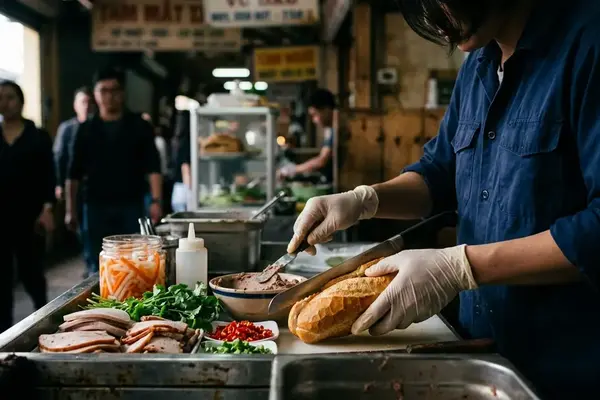
Good assembly feels quick because the decisions happened earlier. Re-crisp the roll, split it lengthwise while keeping one side hinged, then work from dry protection to wet brightness.
- Warm the baguette close to service and let it settle briefly.
- Split the roll without cutting fully through the hinge.
- Spread pâté on the bottom interior and mayonnaise on the opposite side.
- Add the protein in an even layer.
- Tuck in cucumber spears so they run the length of the sandwich.
- Shake or press excess brine from the pickles for 3-5 seconds, then add them over the protein.
- Finish with cilantro and thin jalapeño slices.
- Serve within 5-10 minutes for the best crust contrast.
Moisture Troubleshooting
If the bread starts softening before assembly, return the empty roll to a 350°F oven for 2-3 minutes. Do not reheat after adding pâté, mayo, herbs, or pickles. Heat will break the clean contrast you just built.
If the sandwich tastes flat, check the pickle drainage and the fat level before blaming the protein. Too much brine makes everything taste thin. Too much pâté or mayonnaise makes the herbs disappear. A good banh mi should finish bright, even when the center is rich.
What the Home Kitchen Cannot Fully Copy
A home oven, skillet, or broiler can brown pork well, but within the limits of apartment-oven heat and supermarket bread, it will not fully duplicate the light smoke and fast radiant heat of a street-side charcoal grill. That is not a reason to make a cautious sandwich. It is a reason to control the parts you can control: thin pork, hot cooking surface, crisp bread, drained pickles, and fast service.
The final test is simple. Bite through the crust. If it cracks cleanly, the crumb stays light, the fat feels rich, and the pickles snap back with sweet acidity, the sandwich is doing its job.