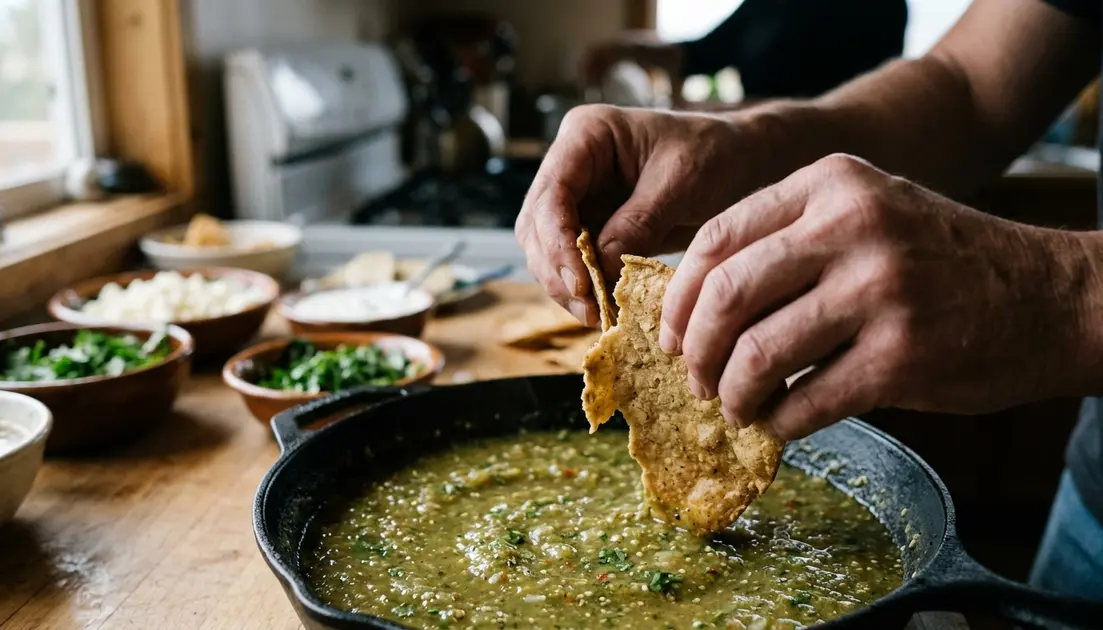
From Zero-Waste Kitchens to Mountain Mornings
Chilaquiles grew from a practical Mexican home-cooking habit: putting yesterday’s corn tortillas and leftover salsa to work in a single skillet. That resourceful method turned basic ingredients into a substantial breakfast. Passed down through generations, this zero-waste approach became a brunch favorite.
The dish suits a high-altitude mountain morning in Breckenridge. Warm tortillas, vibrant sauce, a rich egg, and optional protein make a filling breakfast before hitting the trails. Serve the chilaquiles hot just before guests head out.
Timing dictates the success of the meal. The skillet demands immediate attention once the components meet. Guests should be ready with forks in hand before the final toss occurs.
Core Mechanics of Skillet Chilaquiles
Successful chilaquiles rely on three things: chip thickness, salsa consistency, and timing. Make these decisions before lighting the stove so the dish holds together on the plate.
Thin, store-bought tortilla chips disintegrate rapidly upon contact with hot liquid. Thick-cut, stale tortillas fried at home give the chips the structure this skillet method needs. Cut day-old corn tortillas into roughly six wedges each so the pieces are substantial enough to toss without folding or tearing.
Salsa Consistency Check
The verde sauce should be vibrant and slightly reduced so it coats the chips rather than turning them into a soup. It should cling to a spoon and leave a brief trail when drawn across the skillet.
The final piece is the three-minute serving window. Allow no more than three minutes between tossing each batch of chips with salsa and serving that batch. The chips continue to absorb liquid on the plate, so swift plating preserves the intended texture.
Charring and Simmering the Verde Base
Building a smoky, complex flavor begins under the broiler. For a six-person batch, roast two pounds of husked, rinsed tomatillos alongside two jalapeños and one medium white onion cut into chunks. Turn the vegetables once during the process. Begin checking for blistered surfaces after eight minutes, expecting roughly eight to fifteen minutes in total for the skins to char and split.
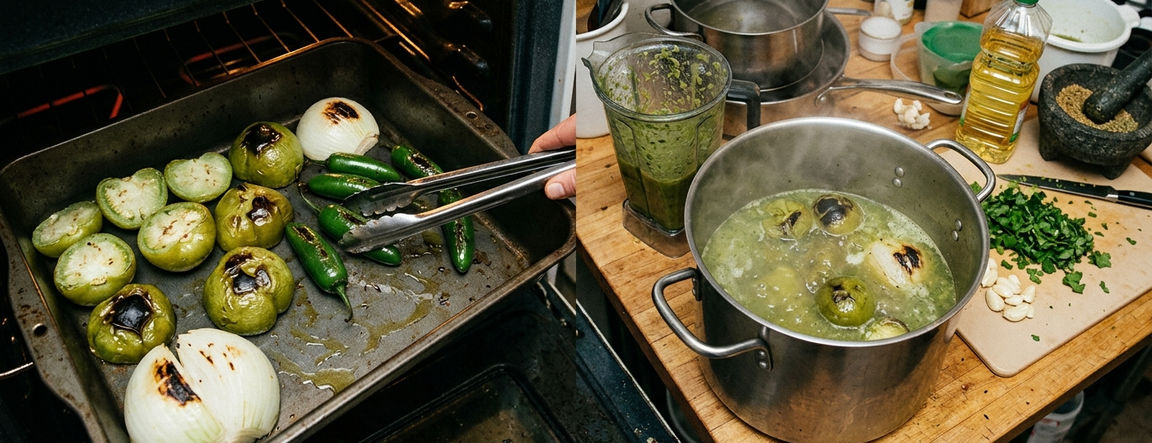
Transfer the roasted vegetables and their accumulated juices to a blender. Add roughly one packed cup of cilantro leaves and tender stems, along with an initial half teaspoon of salt. Pulse the mixture to keep a rustic texture with small pieces visible. Pureeing the salsa introduces too much air and makes it less able to grip the chips.
Pour the blended salsa into a wide skillet and simmer it for roughly five to ten minutes. The raw edge of the onion and cilantro will fade as the liquid thickens. Stop simmering when a spoon drawn through the sauce briefly exposes the bottom of the pan without the liquid immediately rushing back in.
At Breckenridge elevation, treat the roasting and simmering times as check-in ranges. Equipment also affects how quickly surfaces char and liquid reduces, so follow the blistering and spoon-trail cues.
Achieving the Crisp-Tender Tortilla Balance
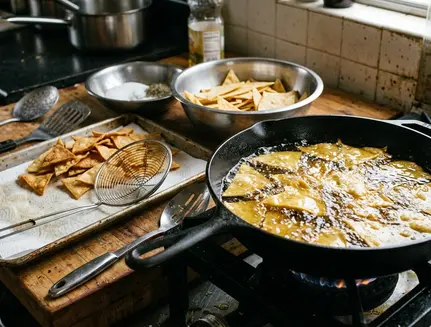
The tortilla’s transformation shapes the entire eating experience. Start with 24 corn tortillas, cut them into six wedges each, and let the pieces dry overnight on loosely covered trays. This drying phase removes surface moisture, allowing the wedges to fry evenly.
Heat neutral oil to 350–365°F in a heavy-bottomed pot. Fry the wedges in uncrowded batches for roughly two to four minutes per batch. Watch for the wedges to become golden and completely rigid. Drain the fried chips on a wire rack or paper towels to halt the cooking process and shed excess oil.
The tossing phase requires a hot skillet and undivided attention. Add the fried chips to the simmering salsa in serving-sized batches. Fold them through the sauce with a few broad turns for roughly 30 to 60 seconds. Repeated stirring fractures the wedges.
Look for the exterior of each chip to soften and absorb the bright verde sauce while the core remains al dente. Transfer the batch to plates immediately, before the three-minute serving window closes.
Layering Proteins and Cold Contrasts
Warm proteins without extending the chips’ soaking time. For six chicken portions, warm two cups of shredded rotisserie chicken directly in the simmering salsa for roughly three to five minutes before adding the chips. Seasoned black beans can be warmed the same way. The protein gets hot and absorbs the tomatillo flavor before the chips enter the skillet.
Staging the Garnishes
Set out chilled Mexican crema, crumbled cotija cheese, and thinly sliced raw red onion before the final toss. Having these elements ready keeps garnishing quick.
These garnishes bring temperature and texture contrast to the hot, soft chips. The cold crema cuts the heat of the jalapeños, the cotija adds a salty bite, and the raw red onion delivers a sharp, crisp finish.
Finish with a freshly cooked egg. Cook six large eggs sunny-side up, aiming for set whites and soft yolks, or softly poach them. Transfer an egg to each plate just as the chips leave the skillet. The rich, runny yolk acts as a second sauce, balancing the bright acidity of the tomatillos and binding the garnishes to the chips.
Executing a Six-Guest Cabin Service
Hosting six people for a hot skillet breakfast takes some planning. Do the knife work and salsa preparation on Saturday evening, reserving Sunday’s last minutes for hot eggs and crisp-tender chips.
On Saturday evening, roast and blend the salsa according to the visual cues. Refrigerate the finished verde sauce within two hours of cooking. Cut the 24 corn tortillas into wedges and leave them to dry overnight on loosely covered trays on the counter.
The Sunday morning schedule runs in stages. At 9:00 AM, begin heating the oil. Fry and drain the tortilla wedges in batches, finishing this process by 9:35 AM. Keep the fried chips undressed on their draining racks.
At 9:30 AM, pour the prepared salsa into a wide skillet and begin warming it over medium-low heat. Set up two separate egg pans with a small amount of butter or oil.
At 9:38 AM, begin frying the eggs in batches and add the two cups of shredded chicken to the warming salsa. Keep the cooked eggs warm on a side plate or cook them in rapid succession if using multiple pans.
At 9:45 AM, begin tossing the chips with the sauce. Work in small batches, folding the chips through the chicken and verde sauce for 45 seconds. Plate the first batch immediately, top with the prepared garnishes and an egg, and hand it to a guest. Repeat for the remaining batches. By 9:50 AM, the last plate is on the table, with the chips still crisp-tender beneath the warm salsa.