The Science of Slow-Cooked Beef: An Executive Summary
Choosing between classic braised short ribs and birria-style beef means working backward from how you plan to serve the meal. Keep English-cut short ribs intact when the occasion calls for composed plates and a reduced wine sauce. Choose chuck-based birria when the meat needs to shred easily for street eats and interactive dining.
The underlying mechanics of breaking down tough cuts remain similar across both preparations. Collagen conversion accelerates during prolonged cooking above roughly 160°F. Hitting a sustained internal temperature between 190°F and 200°F serves as a proven checkpoint for tough beef. A thermometer reading near 195°F provides a useful baseline, though heavily worked connective seams may still resist a skewer and require another 20 to 40 minutes of cooking. Tenderness ultimately depends on how long the meat remains hot and moist.
At an oven or liquid temperature near 300°F to 325°F, beef short ribs or chuck commonly need 2.5 to 4.5 hours. A mandatory 15- to 30-minute rest follows before portioning or shredding.
Flavor Profiles: European Tradition vs. Mesoamerican Complexity
The aromatic foundations dictate the final character of the dish. For short ribs, you brown the beef first, then sweat onion, carrot, and celery in the rendered fat. Deglazing with dry red wine builds the classic European profile. For three to four pounds of short ribs, use roughly two cups of red wine and two to three cups of unsalted or low-sodium stock. Once the meat finishes cooking, you reduce the strained liquid for 15 to 30 minutes to create a glossy glaze.
Birria-style beef relies on a completely different pantry. For three pounds of chuck, gather four to six guajillo chiles plus one to two ancho or pasilla chiles. Toast them for 10 to 20 seconds per side to wake up their essential oils. Soak the toasted chiles in hot water for 15 to 25 minutes before blending them into a smooth adobo.
Birria varies widely by region and household, traditionally featuring goat or lamb. A chuck-and-guajillo version serves as a popular birria-style adaptation among many traditional regional variations.
Meat Selection: Choosing the Right Cut for the Job
Structural integrity matters for formal plating. Select thick English-cut ribs of similar size to guarantee each portion finishes together. Plan on one bone-in English-cut rib weighing roughly 10 to 16 ounces per person before cooking. Pieces around two inches thick retain a recognizable shape on the plate.
Birria requires a cut that yields willingly to shredding. A three-pound boneless chuck roast generally reaches shreddable tenderness after 3 to 4.5 hours of gentle cooking. Cut the chuck into three- to four-inch pieces so the beef cooks evenly without disintegrating prematurely. Rest the cooked meat in the broth for 15 to 20 minutes before pulling it into coarse strands. Adding a small quantity of short ribs to the chuck pot introduces extra gelatin, giving the resulting consommé a richer mouthfeel.
Cooking Mechanics: Braising vs. Submerged Simmering
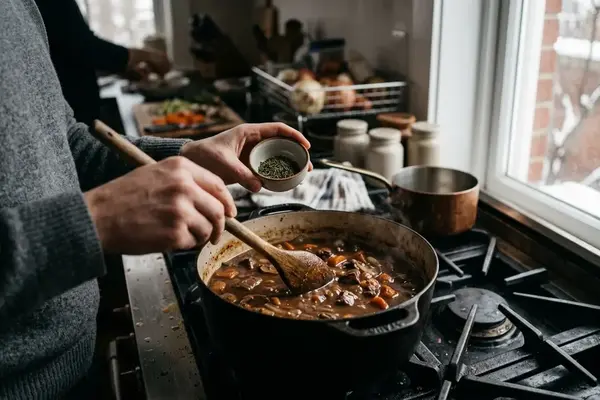
Moisture management separates a braise from a simmer. Pat the short ribs dry and sear them in batches in a lightly oiled Dutch oven for three to five minutes per broad side. Leave space between pieces so escaping moisture avoids steaming the meat.

Add liquid only one-third to halfway up the beef before transferring the covered or partially covered pot to the oven. Cook the short ribs at 300°F to 325°F for 2.5 to 3.5 hours.
Birria requires coating the beef with the blended adobo and fully submerging it in liquid. Cook chuck-based birria at the same 300°F to 325°F oven range, or maintain a bare stovetop simmer for 3 to 4.5 hours.
Altitude Adjustments For Mountain Dining
At elevations around Breckenridge, water boils well below 212°F. Covered moist cooking can take 30 to 90 minutes longer. Evaporation happens faster in thin air. Inspect the liquid level every 45 to 60 minutes rather than assuming a fixed extra hour of cooking time.
Cost Analysis: Premium Cuts vs. Pantry Investments
Evaluating the cost of comfort food requires comparing the usable meal yield rather than the package price alone. Bone-in short ribs include the weight of the bone and serve as individual centerpieces. For four plated servings, you need to purchase approximately three to four pounds of bone-in short ribs.
Boneless chuck shreds easily and spreads across multiple portions. A three-pound boneless chuck roast provides a practical starting quantity for six to eight taco servings—making the protein portion of birria highly economical. The upfront investment shifts to the pantry. A four- to six-ounce supply of dried chiles provides enough seasoning for one robust three-pound batch. Unopened or tightly sealed extra chiles retain their best aroma for roughly three to six months in a cool, dark cupboard.
Serving Versatility: The Plate vs. The Taco
Short ribs demand immediate attention. Serve them right after straining and reducing their sauce so each portion stays intact and visually striking.
Birria offers optimal longevity for drinks & pairings throughout the week. Separate the shredded meat, broth, and surface fat after cooking. This division makes it easy to build quesabirria tacos. Use two to three ounces of shredded beef and one to two ounces of melting cheese per five- to six-inch corn tortilla. Griddle the assembled tacos for two to three minutes per side over medium heat using the reserved surface fat.
Cool any remaining meat and consommé in shallow containers and refrigerate within two hours. Use these refrigerated leftovers within three to four days. Reheat the broth to a full simmer and bring the meat to 165°F before serving.
Weekend Implementation Plan: The Birria Crossover
Friday evening begins the process. Toast, soak, blend, and strain the chile adobo. Coat a three-pound chuck roast thoroughly and refrigerate it for 8 to 16 hours. Allow 25 to 35 minutes for this initial chile preparation.
Saturday requires 20 to 30 minutes for searing the beef and assembling the Dutch oven. Loosen the browned fond with stock, add the remaining adobo, and braise the meat for 3.5 to 4.5 hours. Rest the beef for 15 to 20 minutes. Budget another 20 to 30 minutes to shred the meat and griddle the first batch of tacos for dinner.
Sunday morning bites transform the leftovers into a rich noodle bowl. Simmer the leftover consommé for 5 to 10 minutes. Boil fresh ramen noodles separately for the package-directed range, commonly two to four minutes. Add the reheated beef to the broth only during the final two to three minutes of simmering. Picture the finished bowl: a nest of springy noodles, a ladle of deep-red consommé slicked with chile oil, coarse strands of Friday's chuck settling in, and a scatter of raw onion and cilantro on top—three days of one pot, landing in a single Sunday breakfast.