Gochujang shepherd’s pie keeps the generous spirit of the pub classic while sharpening every layer. The filling carries fermented chile heat, deep beef flavor, ginger, and scallions. A sesame-rich potato crust turns crisp above it, ready for a cold evening, a crowded table, or the kind of mountain dining appetite that calls for serious comfort food.
I prefer this version because each bite has contrast: sweet heat against savory gravy, fluffy potato beneath toasted ridges, and bright scallion cutting through the richness.
From Sunday Roast to Gochujang Gravy
The covered-meat-and-potato format was established by the nineteenth century, after potatoes had become an everyday staple in Britain and Ireland. Its appeal was practical. Cooks could stretch cooked meat and gravy beneath an inexpensive potato lid, turning leftovers from a larger meal into another substantial supper.
That economical structure remains sound. Build one 23-by-33-centimeter pie with 680 grams of ground beef or lamb and about 1.1 kilograms of potatoes, and it yields six substantial servings. Ground meat makes the dish easier to prepare from scratch, while the potato layer still performs its original jobs: sealing in moisture, adding bulk, and developing a browned surface.
The Gochujang Verdict
Gochujang and soy sauce produce a more compelling filling than the customary combination of tomato paste and Worcestershire sauce. The fermented chile paste brings sweetness, heat, salt, and body at once. Soy sauce supplies a clean savory edge that reaches the meat without making the gravy taste muddy.
The potatoes complete the argument. Toasted sesame oil and two colors of sesame seed give the mash a warm, nutty aroma, while fork-cut ridges create crisp points across the top. Underneath, the spicy-sweet gravy stays lush. It is a particularly good cold-weather combination because the heat builds gradually rather than overwhelming the buttery potato.
Building the Fermented Chile Balance
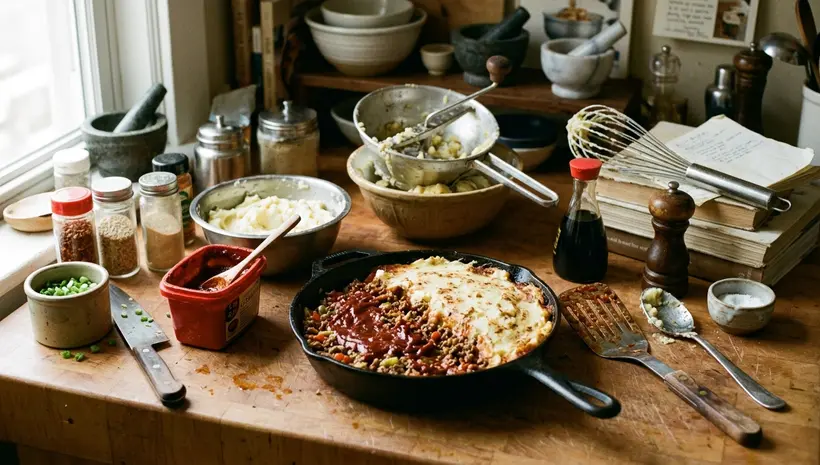
The base starts with a measured ratio: 45 grams of gochujang, 30 milliliters of soy sauce, and 360 milliliters of unsalted or low-sodium broth. These ingredients should enter the pan in stages rather than as a single premixed sauce. Staging preserves the browned fond, gives the gochujang time to dissolve, and leaves room for a final seasoning check after reduction.
What Each Ingredient Does
- Gochujang contributes fermented chile flavor, sweetness, salt, and starch. Its starch helps the gravy cling to the meat as the liquid reduces.
- Soy sauce reinforces the savory character of the beef or lamb and helps loosen the browned material on the skillet.
- Low-sodium broth provides enough liquid for a controlled simmer without committing the dish to excessive salt.
- Toasted sesame oil supplies aroma at the finish. Add 5 to 10 milliliters during the final 1 to 2 minutes of cooking instead of using it to fry the aromatics.
The salted, fermented paste also helps soften the exposed surfaces of the ground meat during the simmer. Its more important structural contribution comes from starch: as water evaporates, the sauce thickens and grips each coarse crumble.
Taste After Reduction
Traditional and small-batch gochujang can differ sharply in heat, salt, and sweetness. Commercial paste offers a steadier baseline for home cooking, though the reduced gravy still needs tasting before any extra soy sauce or sweetener goes in. Gochujang intensity varies by formulation, so the spoon remains the final measure.
A good final balance starts savory, opens into mild sweetness, and leaves a fermented chile warmth at the back of the palate. The potato topping will soften that intensity, so the filling should taste assertive on its own.
Browning the Beef and Reducing the Filling
Heat a wide, heavy skillet over medium-high heat before adding the meat. Divide 680 grams of ground beef or lamb into two batches, then press the first batch into broad contact with the hot surface. Leave it undisturbed long enough to form dark-brown patches before turning and breaking it into coarse pieces. Allow 3 to 5 minutes for each batch.
Space matters here. A crowded skillet traps released moisture, causing the meat to steam. Gochujang added to that pale liquid will produce a loose filling that struggles to hold the potato layer.
Aromatics Before Liquid
- Transfer the browned meat from the skillet while keeping the rendered fat and fond in place.
- Add 200 grams of diced onion and 150 grams of diced carrot. Cook for 6 to 8 minutes, scraping occasionally as the vegetables soften.
- Add 4 minced garlic cloves, 15 grams of grated ginger, and the white parts of 4 scallions during the final 45 to 60 seconds.
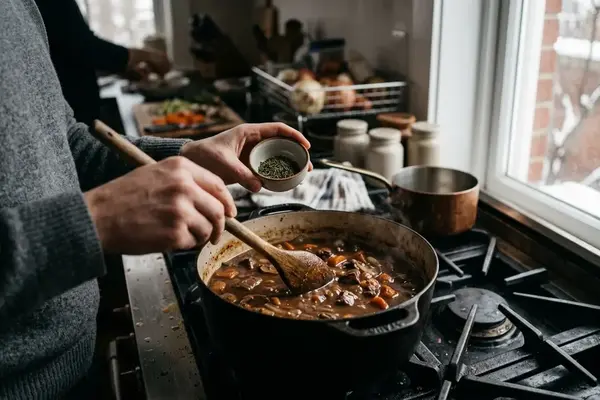
- Return the meat. Add the soy sauce and broth, scraping firmly across the bottom of the skillet to lift the fond.
- Stir in the gochujang until no dense streaks remain.
Keep the filling at a steady uncovered simmer for 10 to 16 minutes. Stir more frequently during the final 4 minutes, when the starch and concentrated liquid can catch at the bottom. Fold in 140 grams of thawed peas only after the gravy has thickened so they stay distinct and bright.
The Spoon-Track Test
Drag a spoon across the bottom of the skillet. The gravy should part cleanly, leaving a visible track before flowing back slowly. Check the outer edge as well; a pool of watery broth there means the filling needs more evaporation.
Hold the Potato
Do not assemble the pie while the filling still behaves like soup. The potato topping adds weight but cannot correct a thin gravy. Reduce first, then taste and transfer.
Making a Fluffy Sesame Potato Crust
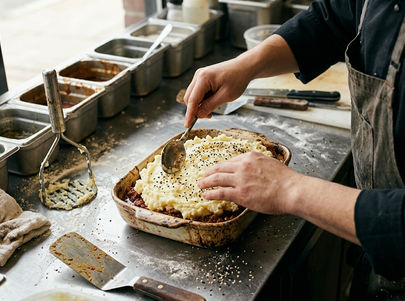
Use 1.1 kilograms of peeled Russet potatoes or unpeeled Yukon Golds, cut into even 4-centimeter pieces. Russets make a drier, fluffier lid. Yukon Golds bring a naturally buttery texture and a little more density. Both work, though Russets generally absorb more milk.
Place the cut potatoes in cold salted water and bring the pot up to a simmer gradually. Starting cold allows the centers to cook before the exteriors begin to disintegrate. Simmer for 15 to 20 minutes, until a knife passes through a piece without meeting a hard center.
Steam Before Mashing
Drain the potatoes for 1 minute, then return them to the uncovered warm pot. Let them steam-dry for 2 to 3 minutes. This short pause drives off surface water that would otherwise dilute the butter and encourage a loose topping.
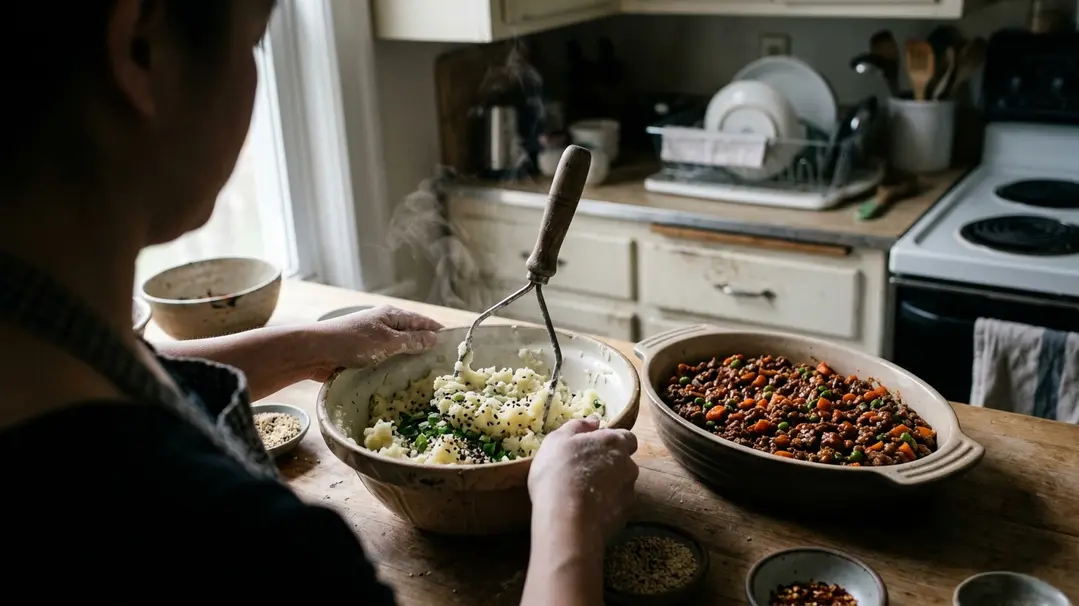
Mash while the potatoes remain hot. Fold in 85 grams of melted butter, 90 to 120 milliliters of warm milk, 10 milliliters of toasted sesame oil, and 10 milliliters each of black and white sesame seeds. Use roughly 8 to 12 broad strokes rather than vigorous stirring. Overworking ruptures more starch cells and turns an airy mash elastic and gluey.
Set the milk quantity by texture. The mash should spread without tearing the filling, yet remain firm enough to hold a fork ridge. Because Russets absorb more dairy than waxier Yukon Golds, volume alone cannot settle the final consistency.
Cut Deep Ridges
Once the potatoes cover the filling, drag the tines of a fork through the surface in long, deep lines. Cross a few of those lines to raise irregular peaks. Flat mash browns in patches; pronounced ridges expose more edges to the oven’s heat and create the crisp sesame crust that defines this version.
Crust Readiness
- The potatoes break cleanly under a knife before mashing.
- The mash holds a distinct peak without crumbling.
- Sesame seeds remain evenly distributed after a few broad folds.
- Fork marks stand above the surface instead of settling flat.
Layering, Baking, and Chilling Ahead
Transfer the reduced filling to a 23-by-33-centimeter baking dish and spread it into an even layer. Let it cool for 10 to 15 minutes, until it is no longer actively steaming. This pause firms the gravy enough to support the mash and keeps steam from forcing channels through the potato.
Build From the Outside In
Place several spoonfuls of potato around the perimeter first. Spread them gently against the edges of the dish, then work inward. That outer ring anchors the topping and reduces the chance of dragging meat into the mash. Add the remaining potato, level it lightly, and cut the fork ridges across the surface.
Bake a freshly assembled pie at 220 degrees Celsius for 25 to 35 minutes. The filling should bubble at the edges, and the tallest potato ridges should turn golden. If the center is hot but the crust still looks pale, place the dish 10 to 15 centimeters below the broiler for 2 to 4 minutes. Watch continuously because sesame-studded peaks move from toasted to scorched quickly.
Prepare It the Day Before
The assembled, unbaked pie can stay refrigerated for no more than 24 hours. Cover it only after the components have cooled, which prevents trapped condensation from wetting the ridges.
Before baking, let the chilled dish stand at room temperature for 20 to 30 minutes. Bake it for 40 to 50 minutes, allowing the cold center enough time to heat through. If the sesame peaks brown before the middle becomes hot, cover the dish loosely and continue baking.
For a drink alongside, choose something crisp and clean enough to reset the palate between bites. The dish already carries fermented depth, butter, chile, and toasted sesame, so a heavily sweet accompaniment tends to blur its edges.
Give the Crust Its Full 15 Minutes
The pie will look ready the moment it leaves the oven. Gravy bubbles around the rim, sesame peaks crackle, and the first spoonful feels difficult to postpone. Serve it then, however, and the filling will spread across the plate while the potato crust slides into the gap.
Set the dish on a heatproof surface and rest it uncovered for a minimum of 15 minutes and up to 20 minutes. During that interval, the gravy stops boiling and gains enough body to support a cut portion. The potato layer also settles into a cohesive crust while keeping its crisp upper ridges.
Use a sharp-edged serving spoon or square spatula. Cut vertically through the potato first, then slide underneath the filling and lift the portion from below. This motion preserves the layers far better than scooping from the side.
Make the 15-minute rest mandatory. It is the decisive step between a soupy heap and a clean, sturdy slice of gochujang comfort food.