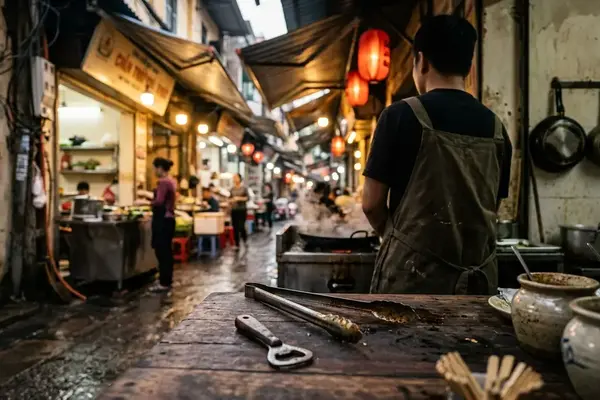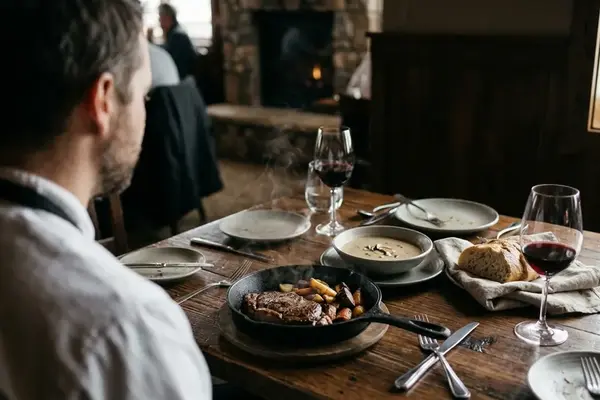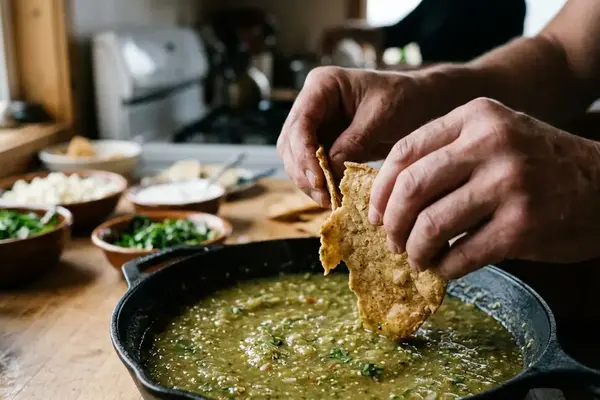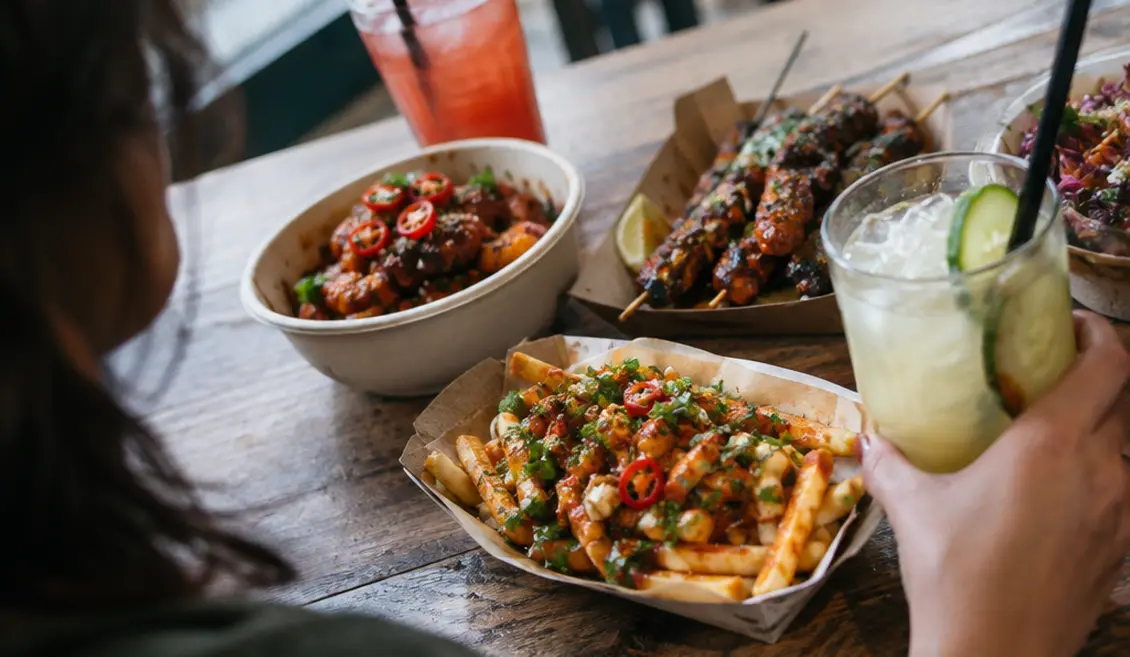
From Street Stall Coolers to a Three-Glass Tasting Blueprint
A good zero-proof flight gives each bite somewhere to go: crisp acid and bubbles → cool sweetness and herbs → roasted aroma and gentle astringency.
Distinct street-drink traditions offer the starting points. Chinese suanmeitang commonly combines smoked sour plum, hawthorn, and sugar. Mexican agua de tamarindo brings together tamarind, water, and sugar, while South Asian nimbu soda combines citrus, soda water, and sometimes salt. These drinks have separate culinary identities; their sour, sweet, smoky, and saline profiles provide useful inspiration for pairing bold street eats.
Build three contrasting glasses, then serve each alongside its food. That progression gives fried snacks a bright opening, chile-heavy bites a sweeter pause, and browned meats a roasted finish. Plan approximately 4 fluid ounces per glass, totaling about 12 fluid ounces across the meal.
- Lime-cucumber sparkle: a high-acid opener for crispy carnitas edges and fried snacks.
- Lightly sweetened jasmine or hibiscus: a still, herbal middle glass for chili-oil burn.
- Grapefruit-scented roasted tea: a gently drying closer for the browned finish of lamb skewers.
Bring the glasses out with their corresponding dishes. Leaving all three on the table lets the tea warm and the opener lose its sparkle before their turn.
How Sweetness, Acidity, Bubbles, and Tannins Shape Chile Heat
The burning sensation starts when capsaicin binds to heat-sensing receptors on the tongue. These TRPV1 receptors participate in heat and pain perception. Capsaicin dissolves poorly in water, which explains why an icy sip can feel briefly soothing without efficiently removing the source of the burn.
Give each ingredient a specific job. Sweetness can reduce perceived burn; cool temperatures provide short-lived relief. Aim to serve these drinks at 4–8°C / 39–46°F, a practical temperature target rather than a threshold that extinguishes chile heat.
Lime supplies sour contrast to rich pork belly or fried masa. It does not chemically dissolve the fat. Carbonation brings a lively sensation and helps release aromas, though forceful bubbles can add sting when the food is already intensely hot.
Tea supplies another kind of contrast. Its polyphenols interact with salivary proteins, creating a drying sensation called astringency. That finish differs from lime's sourness and can give caramelized meat a distinct endpoint.
For intensely hot food, start with the still, lightly sweetened herbal glass. Strong bubbles and pronounced astringency can add discomfort to an already fiery bite.
The finished dish sets the adjustment: a pepper's Scoville rating does not establish the capsaicin dose in an individual serving.
Build the Lime, Herbal, and Roasted-Tea Flight
These measured starting recipes make approximately 120-milliliter tasting pours. Prechill the ingredients and glassware, and taste each drink with its intended food before committing to a batch.
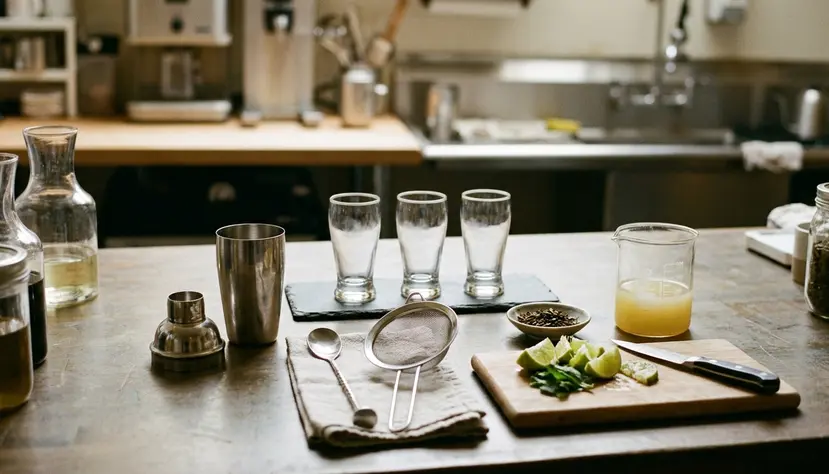
Glass One: Lime-Cucumber Sparkle
- Gently press 15 grams cucumber with a small pinch of sea salt for 5–10 seconds. Keep the pressure light.
- Add 10 milliliters fresh lime juice, then strain into a chilled serving glass.
- Add 100 milliliters chilled sparkling mineral water immediately before serving.
This is the crispest glass in the lineup. Serve it with fried snacks or carnitas while their edges still crackle. The cucumber contributes a fresh aroma; lime and salt carry the pairing.
Glass Two: Cool Herbs and Gentle Sweetness
For the base, refrigerate 4 grams jasmine tea in hovering around 475 milliliters water for 6–8 hours, or 8 grams dried hibiscus in the same water volume for 4–6 hours. Strain before assembling the drink.
- Measure 10 milliliters Demerara syrup made with equal weights sugar and water into a small glass.
- Gently press 2–3 mint or Thai basil leaves into the syrup.
- Add 100 milliliters chilled jasmine or hibiscus tea and 10 milliliters cold water. Stir and taste with the food.
Keep this glass still. Its modest sweetness and cool temperature make it the first choice for spicy skewers, birria, or chili-oil dumplings. If hibiscus tastes too sharp alongside the dish, adjust the syrup in small increments.
Glass Three: Roasted Tea With Grapefruit Aroma
- Steep 3 grams roasted oolong in 150 milliliters water at 90°C / 194°F for 3–4 minutes. Alternatively, steep 2 grams lapsang souchong at 95°C / 203°F for 2–3 minutes.
- Strain promptly and chill the tea.
- Combine 110 milliliters chilled tea with 10 milliliters verjus.
- Express a washed strip of grapefruit peel over the glass to release its aromatic oils.
Choose roasted oolong for toasted flavors alongside lamb, or lapsang souchong when a smoky aroma suits the plate. The grapefruit peel supplies fragrance without adding a substantial quantity of juice.
Match Each Glass to Tacos, Dumplings, Elote, and Skewers
Crispy pork carnitas → lime-cucumber sparkle. Sourness contrasts with browned fat and crackling edges. If the bite leaves a heavy finish, add lime to the opener in shy of 3-milliliter increments, tasting with another bite after each addition.
Chili-oil dumplings → sweetened jasmine or hibiscus. The still middle glass avoids another layer of carbonated sting. When it tastes too sharp against the dumplings, add in the ballpark of 2.5 milliliters syrup, stir, and retaste. Move that bite away from the sparkling opener rather than increasing its bubbles.
Charred elote → lime-cucumber sparkle. Lime and salt bring clear contrast to the corn's browned surface. This match puts the opener to work beyond fried food.
Spiced lamb skewers → grapefruit-scented roasted oolong. Toasted tea aromas sit comfortably beside browned meat. If the chile dominates the skewer, serve the herbal middle glass with it instead.
Glaze and Serrano Traps
Keep drink sweetness restrained with sticky glazed ribs; another sweet layer can obscure their browned, savory flavors. With raw serrano salsa, begin with the herbal middle glass. A strongly bitter botanical drink adds another intense sensation without supplying the sweetness used here to soften perceived heat.
Use mild, medium, and very hot menu descriptions as initial cues only. Taste the prepared food with the drink, then change one ingredient at a time: syrup for a middle glass that needs more sweetness, lime for an opener that needs sharper contrast. Keep both adjustments to pushing 3 milliliters per round.
Steep Tonight's Tea for an Easy Street-Food Board
Work backward from dinner. Start jasmine 6–8 hours ahead or hibiscus 4–6 hours ahead. While that base infuses in the refrigerator, dissolve 100 grams Demerara sugar in 100 grams hot water. Transfer the syrup to a clean container, cool, and refrigerate.
Prepare the hot-brewed closer next. Cool the strained tea in a covered, heat-safe container set in an ice-water bath for 10–15 minutes, stirring occasionally, then refrigerate until chilled. Hold prepared tea and syrup covered at 4°C / 40°F or below, and use them within 48 hours for this workflow.
Set out 5–6-fluid-ounce glasses for approximately 4-fluid-ounce pours. That leaves room for handling and a cube without bringing pint-sized drinks to a comfort food spread. For warm outdoor service, use one large cube rather than an equal mass of small chips to reduce exposed surface area.
Measure still components ahead; reserve sparkling water until the opener goes to the table. The same setup works for mountain dining after a day outside or a kitchen-counter taco night.
Start the cooling base now: put 4 grams jasmine tea or 8 grams dried hibiscus into a clean jar with 16 fluid ounces / 473 milliliters cold water, cover, and refrigerate; strain jasmine after 6–8 hours or hibiscus after 4–6 hours.