How Starch, Fat, and Heat Shape the Empanada Wrapper Before the Filling Enters
Start with the wrapper whenever you want to understand a Latin American empanada. The grain or starch you choose, the way fat enters that dough, and your choice of dry oven heat or hot oil dictate how the pocket behaves under stress. A tender wheat shell, a blistered corn crust, and a dense green-plantain wrapper each demand a specific filling consistency and portion size to stay intact. Once you lock in that structural framework, the braise or cheese inside can take center stage.
Three baseline decisions govern every variation across the region:
- The primary starch: Wheat flour, precooked cornmeal, fresh alkaline-treated corn masa, mashed green plantain, or boiled cassava.
- The fat system: Rendered beef tallow, pork lard, butter, or vegetable oil worked directly into the starch.
- The cooking medium: Radiant oven heat on a hot metal deck versus full immersion in a frying pot.
Wait to generalize by country borders, because these named preparations represent local specialties while neighboring kitchens within Argentina or Ecuador routinely swap between oven baking, deep frying, wheat flour, and mashed plantain depending on the occasion. Separating the starch mechanics upfront also keeps crucial technical boundaries clear. For instance, precooked cornmeal goes through a heat treatment to gelatinize its starches, whereas nixtamalization requires cooking field corn in an alkaline solution; Colombian and Venezuelan corn pockets generally rely on precooked cornmeal, though regional cooks also grind cooked corn or fresh masa depending on local tradition. Likewise, keeping starch categories distinct explains why Ecuadorian street eats include both chewy plantain pockets and airy, sugar-dusted fried wheat pastries.
| Named Preparation | Wrapper and Fat | Cooking Medium | Structural Decision |
|---|---|---|---|
| Argentine baked beef empanada | Wheat dough enriched with rendered beef fat or pork lard | Hot oven | A rolled disc roughly 2 mm thick and tightly crimped repulgue contain steam from juicy diced beef. |
| Chilean empanada de pino | Wheat dough softened with animal fat or oil | Hot oven | A broader square-folded envelope supports a generous portion of onion-beef pino, egg, and olive. |
| Colombian fried corn empanada | Yellow precooked cornmeal dough, often tinted with achiote | Immersion frying | Plastic-pressed discs hold a mashed potato and beef mixture that resists bursting in hot oil. |
| Venezuelan corn empanada | Fine white precooked cornmeal, often with a pinch of sugar | Immersion frying | Moist, pliable dough seals cleanly around hearty fillings like shredded cazón or pabellón ingredients. |
| Ecuadorian empanada de verde | Boiled and mashed unripe green plantain dough | Immersion frying | Warm-kneaded plantain starch forms a cohesive moisture barrier around melting queso fresco. |
| Ecuadorian empanada de viento | Thin wheat-flour dough with butter or shortening | Immersion frying | Gluten elasticity allows the wrapper to puff dramatically around cheese before receiving a dusting of granulated sugar. |
| Paraguayan pastel mandi'o | Mashed boiled cassava root blended with a small share of flour and fat | Immersion frying | Dense root starch binds into a crisp, golden shell around seasoned beef. |
Wheat Tapas vs. Corn Dough: Gluten Relaxation, Rendered Fats, and Hydration
Watch how a wrapper fails on the board and you immediately know what the dough needs. If a wheat disc shrinks back the second you lift the rolling pin, its gluten network needs time to relax. If a pressed corn circle splits into jagged fissures along its perimeter, the meal lacks enough water to bind. Managing those two behaviors comes down to how you handle protein, starch, and fat before the filling ever touches the table.
Wheat-based tapas—the standard across Argentina, Chile, and Bolivia—rely on controlled gluten development. You mix wheat flour, warm brine, and fat just until a cohesive mass forms. Working rendered beef fat (grasa vacuna) or pork lard (manteca de cerdo, keeping the full name in mind since the lone word manteca means butter in parts of the Southern Cone) directly into the flour coats the protein strands. That fat barrier shortens the dough, yielding a tender, crumbly bite once baked.
True flaky layers require folding and rolling solid fat into laminated sheets, and mixing lard or tallow straight into the flour bowl will never waterproof a bottom crust on its own. Instead, animal fats give you a supple disc that crimps cleanly without tearing.
Resting Versus Chilling on the Pastry Board
Wheat dough needs a covered refrigerator rest of 30 to 60 minutes before you roll it out to a thickness of approximately 2 millimeters. Resting and chilling do two separate jobs inside the bowl. Resting lets the hydrated gluten threads unwind so the dough stops fighting your rolling pin, while chilling firms up the dispersed animal fat so the paste does not turn greasy under your palms. If a chilled block feels stiff when it leaves the refrigerator, let it sit covered on the counter for 10 to 15 minutes until it yields comfortably to pressure.
Corn doughs follow a completely different physical logic because they contain zero gluten. When working with precooked yellow or white cornmeal for Colombian or Venezuelan comfort food, you stir warm water into the dry meal using the specific liquid ratio on your chosen recipe—wheat hydration ratios do not translate here. Warm water speeds up starch absorption without needing to be freshly boiled. Let the hydrated mixture sit covered for 5 to 10 minutes so every granule swells, then knead it into a smooth ball.
Because corn dough cannot stretch, you divide it into balls, keep the waiting portions covered under a damp towel, and press each piece between two plastic sheets. Inspect the pressed perimeter before adding filling. A smooth, continuous rim tells you the hydration is spot on; dry cracks mean you need to knead a splash of water back into the batch immediately.
Southern Cone Oven Traditions: Argentine Repulgues, Chilean Pino, and Bolivian Salteñas
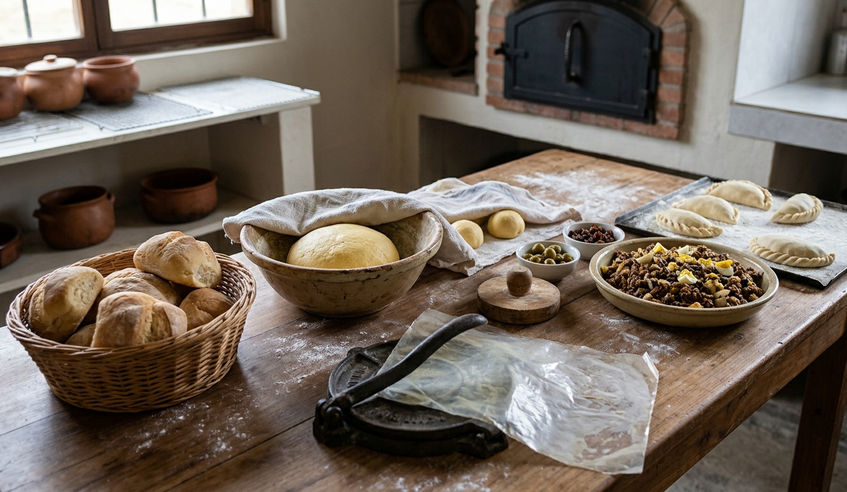
Southern Cone bakers treat the wheat wrapper as an enclosed roasting vessel. By sealing seasoned meats inside sturdy wheat discs and sliding them into a blistering oven, you get both a browned pastry shell and a self-basting braise inside.
In northwestern Argentina, Salta-style beef empanadas celebrate precision knife work. Instead of grinding the meat, you hand-dice chilled beef into tiny cubes (carne cortada a cuchillo) so the fibers hold their chew, then toss them with parboiled potato cubes, earthy cumin, and chopped scallions. Further south in Tucumán, cooks prize matambre—a thin cut taken from the flank and abdominal section—simmering the beef until fork-tender before chopping it into a rich, savory filling.
Once you spoon the cooled meat onto a wheat disc, you seal the curve with a repulgue, a continuous pleated fold running from corner to corner. That braided ridge locks moisture inside the seam during high-heat baking. In both commercial empanaderías and home kitchens, the repulgue also acts as a visual code: a shop will assign one distinct pleat pattern to knife-cut beef, another to chicken, and a third to humming melted cheese so nobody has to break open a crust to see what is for dinner.
Chilean Empanadas de Pino and the Gel Mechanics of Bolivian Salteñas
Cross the Andes into Chile and the proportions expand. An empanada de pino starts with a generous foundation of finely diced onions cooked down slowly with beef, cumin, and ají de color (sweet red pepper powder), with some cooks adding a pinch of smoked merkén chile for warmth. You spoon the cooled pino onto a wide wheat circle, then press three signature anchors directly into the meat before folding: a quartered hard-boiled egg wedge, a whole black olive, and a couple of plump raisins. Rather than braiding a crescent edge, you fold four straight sides inward over the filling to create a broad rectangular or square parcel with tidy corner flaps.
Bolivian salteñas push oven engineering to its highest level by turning a handheld pastry into a steaming soup bowl. To pull off a liquid center without ruining the raw dough during assembly, you cook a spiced beef or chicken stew the day before and enrich the broth with unflavored gelatin, matching the exact gelatin weight to the liquid volume in a tested salteña recipe. Refrigerate that mixture for 8 to 12 hours until it sets into a sliceable block.
When you fold the slightly sweet, sturdy wheat wrapper around the cold cubed gel, you crimp the braided seam straight along the top spine like a standing ridge. Slide the tray into an oven preheated to approximately 450°F (230°C) for an 18 to 25-minute bake. Inside the sealed dome, the solid gelatin melts back into a piping-hot broth while the thick top seam keeps the juice from leaking onto the sheet pan.
Andean and Caribbean Skillet Traditions: Crispy Corn Pockets and Green Plantain Crusts
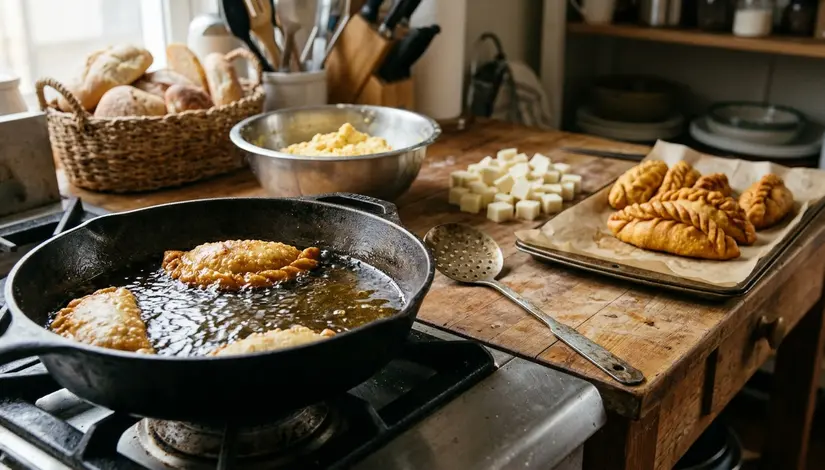
Move toward the northern Andes and the Caribbean coast, and the heavy iron skillet takes over from the oven deck. Deep frying transforms humble starch pastes into shattering, golden street eats in minutes.
To build a classic Colombian empanada, start by cooking cubes of potato until soft and mashing them directly into shredded or finely chopped beef seasoned with hogao—a slow-sautéed base of ripe tomatoes and scallions. While you still must drain excess cooking liquid from the meat, the mashed potato binds the loose strands together so they sit neatly inside a small wrapper without puncturing the thin walls. For the crust, hydrate yellow precooked cornmeal, adding a spoonful of warm achiote (annatto) oil if you want a deeper sunset hue. Press a small disc between plastic, fold it over a modest scoop of potato-beef filling, and seal the half-moon edge with the rim of a small bowl or glass. Fry the pockets at 350 to 365°F (177 to 185°C) for 4 to 6 minutes, turning them gently until the shell turns crisp and glass-smooth.
Venezuelan empanadas rely on fine white precooked cornmeal, often kneaded with a touch of sugar to encourage deep golden browning in the pot. Because the finely ground white dough presses into a smooth, yielding sheet, cooks pack it with bold coastal and home-style fillings. On the islands and along the shore, cazón (flaking, seasoned shark simmered with aromatics) is a legendary morning bite. Inland, you can order a pabellón empanada that layers four iconic comfort ingredients—shredded beef, stewed black beans, sweet fried plantain slices, and salty white cheese—inside a single crispy corn shell.
Ecuadorian Plantain Mash Versus Puffed Wheat Crusts
Ecuadorian skillet traditions showcase two completely different starches side by side, and keeping their dough builds separate ensures success at the stove:
- Empanadas de verde: Peel and chunk unripe green plantains, then boil them for 20 to 30 minutes until a fork slides easily through the center. Drain the chunks and mash them immediately while hot, kneading the dense paste on a flat surface until it turns smooth and elastic. Roll the warm plantain dough into a thin circle, tuck a generous stack of fresh white cheese into the middle, fold, and fry until the exterior blisters into a nutty, structured shell.
- Empanadas de viento: Switch entirely back to wheat flour. Roll a butter- or shortening-enriched wheat dough paper-thin, place seasoned cheese inside, crimp the rim, and slide it into hot oil. As water vapor expands against the stretchy gluten canopy, the pastry puffs up like a golden pillow (earning its "wind empanada" title) and receives a snowfall of granulated sugar the second it lands on the cooling rack.
Home Kitchen: Chilling the Braise, Controlling Heat, and Pairing Table Sauces
Every blowout in a home oven or frying pot starts with warm filling. Spoon a steaming beef stew onto raw dough and two problems happen right away: the heat melts the fat inside the wrapper before you can finish the crimp, and trapped moisture flashes into high-pressure steam the moment the pastry hits the heat, blowing open your careful fold.
Cold Filling Sealing Rule
Spread cooked fillings into shallow pans and chill them thoroughly before touching the dough. Solidified cooking fats keep wrapper margins clean and dry so every seam locks shut on the first press.
Follow a strict four-step assembly sequence to keep your pastries intact:
- Rapid shallow cooling: Transfer freshly cooked meat or vegetable fillings out of the hot Dutch oven and spread them across shallow baking dishes. In line with USDA home food-safety standards, get perishable cooked fillings into the refrigerator within 2 hours of cooking (or within 1 hour if your kitchen temperature sits above 90°F or 32°C). Chilling in a shallow layer solidifies the fat quickly and gives gelatin-bound stews the 8 to 12 hours they need to firm up completely.
- Conservative portioning: Place a neat mound of cold filling slightly off-center on your disc, leaving a clean, grease-free border around the rim.
- Air expulsion and initial seal: Fold the top half of the wrapper over the mound, cup your fingers gently around the filling to push out trapped air pockets, and press the flat edges firmly together.
- Structural lock: Form your pleated repulgue on wheat dough—standing the seam upright along the top spine if you are baking liquid-filled salteñas—or cut a clean crescent seal through the plastic wrapper on corn and plantain pockets.
Matching Thermal Mass and Bright Table Condiments
Once your tray is assembled, give the wrapper the sudden heat shock it needs to set its structure. For ordinary baked wheat empanadas, slide a heavy baking sheet or baking steel into the oven and preheat it at 425 to 450°F (220 to 230°C) for 25 to 35 minutes before loading your pastries. That stored thermal mass sears the bottom crust on contact during an 18 to 25-minute bake, preventing soggy bases. When frying corn or plantain pockets, use a deep heavy pot filled with enough neutral oil for the pastries to float freely with ample headspace above the surface, checking the oil with a thermometer between batches so the temperature never dips.
Because rendered tallow, lard, and frying oil coat the palate with savory richness, every regional empanada tradition relies on a sharp, acidic table condiment served in a bowl alongside the platter to keep the crust crisp until the moment you bite:
- Colombian ají picante: Finely minced fresh cilantro, scallions, and hot chile peppers swimming in a bright mix of vinegar and water—spooned directly inside a steaming fried corn pocket after you bite off the top corner.
- Chilean pebre: A punchy, rustic relish of finely diced tomatoes, onion, crushed cilantro, hot chiles, and citrus or vinegar that cuts straight through the sweet onion richness of an empanada de pino.
- Bolivian and northwestern Argentine llajua: A vibrant, fiery puree anchored by fresh tomatoes and locoto chiles, native to Bolivian tables and shared across the border in northwestern Argentina alongside Salta-style beef pastries and juicy salteñas.
Will you start your next kitchen session by chilling a gelatin-bound salteña filling for a hot oven, or by hydrating achiote-tinted corn dough for the frying pot?