Pierogi, Pelmeni, and Mandu: Choose Your Supper Batch
Snow gathers outside the kitchen window. Flour streaks the wooden butcher block, and a cast-iron skillet hisses as boiled pierogi slide into butter. I want that supper to deliver tender wrappers, generous centers, and enough crisp edges to make the last dumpling worth negotiating over.
Three controllable variables determine the result: dough hydration, filling moisture, and an airtight seal. Choose your dumpling first, then organize the work around its wrapper, filling, and fold. These three comfort food traditions share a practical foundation, while asking different things of your hands and stove.
| Dumpling | Wrapper | Filling preparation | Fold | Cooking route |
|---|---|---|---|---|
| Pierogi | Tender wheat dough; optional sour cream or butter | Cook and cool potato-cheese or cabbage filling | Flat-pinched half-moon | Gentle boil, then optional butter browning |
| Pelmeni | Thin, elastic wheat dough, commonly with egg | Mix raw minced meat with onion | Sealed half-moon with joined corners | Gentle simmer |
| Mandu | Thin wheat wrapper | Drain tofu, cabbage, or kimchi; combine with meat | Pleated crescent, joined crescent, or purse | Sear, steam, then re-crisp |
For a first batch, I would choose potato-cheese pierogi: the cooked filling lets you concentrate on rolling and sealing. Pelmeni reward thin, even sheets; mandu bring the textured filling and crisp-bottomed pleasure of street eats to the supper table.
Arrange the Counter Before Rolling Begins
Set the counter in production order: covered dough, rolling space, filling bowl, then a parchment-lined receiving tray. Keep the filling spoon separate from the fingers that press the seams. A greasy thumb can undo otherwise careful shaping.
- Tapered wooden dowel: use short strokes and rotate each wrapper to thin its edges individually.
- Bench scraper: lift sticky dough and clear dried scraps before they embed themselves in the next sheet.
- Wide spider strainer: support boiled dumplings from below instead of gripping softened seams.
- Prepared sheet pan: dust parchment lightly with flour or fine semolina, then arrange dumplings without touching.
A manual pasta roller suits pelmeni because it produces consistent sheets for cutting. Feed a small portion through progressively narrower settings, judging the dough itself rather than the machine's numbers. Hand-rolling suits pierogi and mandu when you want direct control over the center and rim.
Divide the dough into four portions. Roll one while keeping the others covered; this keeps the working area manageable and protects the remaining dough from drying.
Build Wrappers That Stretch, Fold, and Stay Tender
Mix the dough before finishing the fillings, then give it a 30–45-minute covered rest. Flour continues absorbing water during that interval. Judge its handling after the rest before adding more flour, and keep cut circles covered so their rims remain flexible.
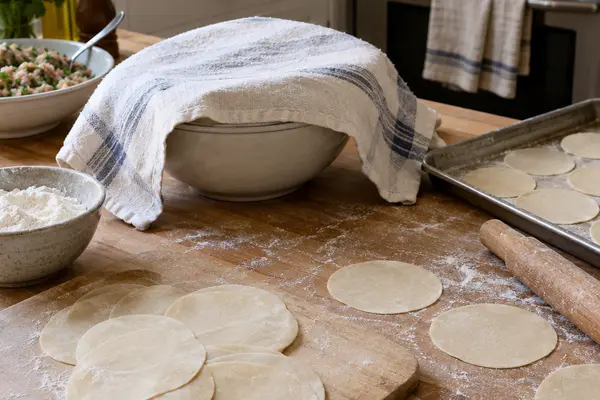
For pierogi, warm water helps hydrate the flour; sour cream or melted butter supplies fat that tenderizes the wrapper. A potato-cheese batch benefits from enough substance to carry its heavy filling: approximately 2–3 mm is a useful starting thickness. Potato-enriched dough is another variation, while a tender wheat-flour wrapper remains the foundation.
Pelmeni need a stronger, thinner skin. Egg contributes protein and structure, kneading develops the gluten network, and cold water keeps the mixture cool during mixing. Start around 1–1.5 mm thick. The sheet should stretch around the meat without tearing as you bring its corners together.
For homemade mandu wrappers, hot water partially gelatinizes flour starch and reduces elastic resistance, making the dough pliable. Purchased wrappers offer a practical shortcut. Keep the stack covered, brush loose starch from each sealing rim, and apply only a thin film of water before pressing.
Control Filling Moisture and Protect the Sealing Rim
Each filling needs a different moisture decision: release steam from potatoes, bind cold broth into pelmeni mince, and squeeze excess liquid from mandu vegetables and tofu. Prepare the potato filling first so it can cool. Drain vegetables during the dough rest, then mix raw-meat fillings last and refrigerate them between small shaping batches.
Cool the Potato-Cheese Center
Rice starchy potatoes while hot, then spread the mash in a shallow dish to release steam. Once cool, combine it with cooled caramelized onions and farmer's cheese or a sharp cheddar variation. This sequence keeps trapped heat from softening the wrapper during assembly.
Bind Broth into Pelmeni Mince
Combine finely minced pork and beef with grated onion. Work in cold broth or crushed ice gradually until the filling holds together without liquid pooling in the bowl. The wrapper must contain that moisture through shaping and simmering to deliver a juicy bite.
Squeeze the Mandu Vegetables
Salt chopped fresh napa cabbage, let it stand for 15–20 minutes, then squeeze firmly. Squeeze kimchi separately and press firm tofu in a clean towel. Combine with ground pork, scallions, garlic, and sesame oil for a filling with distinct textures rather than loose vegetable water.
Protect the Rim
Keep potato mash, meat juices, sesame oil, and loose starch away from the final 8–10 mm of dough. That clean border gives the seam room to bond.
For an 8–9 cm wrapper, start with approximately 1–2 teaspoons of filling. Bring the edges together, press air toward the remaining opening, then seal. Pinch pierogi into half-moons; join the corners of sealed pelmeni; pleat one mandu edge against the flatter edge. Decorative folds follow a secure closure.
Simmer Gently, Then Build a Crisp Bottom
Inspect the seams before cooking. Trapped air, overfilling, dried rims, and grease or starch along the seal all invite splits. A vigorous boil adds collisions against neighboring dumplings and the pot walls. Lower dumplings into gently bubbling water and stir carefully once to free any resting on the bottom.
For fresh potato-cheese pierogi, begin checking wrapper tenderness 2–4 minutes after they float. Lift with a spider and toss promptly in melted butter. Serve them soft or brown the boiled dumplings in butter over moderate heat.
Small fresh pelmeni have a checking window of roughly 5–8 minutes at a gentle simmer. Use a thin-tip thermometer in the filling: the USDA safe minimum internal temperature guidelines specify 160°F/71°C for ground beef and pork and 165°F/74°C for ground poultry. Floating signals progress; center temperature determines meat doneness.
For mountain dining in Breckenridge, lower boiling temperatures mean these cooking windows are starting points; check wrapper tenderness and the center temperature of meat fillings.
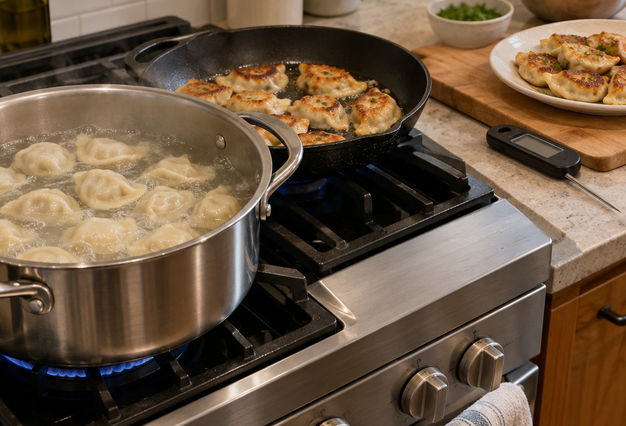
For fresh medium pork mandu, sear in neutral oil for approximately 2–3 minutes. Carefully add a shallow layer of water and immediately cover with a tight lid. Steam for approximately 5–8 minutes, check the filling temperature, then uncover for 1–2 minutes to evaporate the water and re-crisp. Butter suits the separate task of browning already-boiled pierogi.
Freeze a Second Supper and Set Out the Condiments
A freezer batch starts on the tray. Arrange shaped, uncooked dumplings in a single layer on lightly dusted parchment and freeze uncovered until rigid, approximately 2–4 hours. Check that the centers feel firm before transferring them to airtight bags. Remove excess air and label each bag with the filling and freezing date.
Keep the freezer at 0°F/−18°C or below; tight packaging reduces drying and freezer burn. Cook dumplings directly from frozen. Follow USDA handling guidance by keeping raw-meat fillings at 40°F/4°C or below and cooking or freezing raw ground meat within 1–2 days, including preparation and shaping time.
Set out the condiments while the last batch cooks:
- Pierogi: caramelized onion rings, crisp bacon bits, and cold sour cream.
- Pelmeni: butter, cracked black pepper, fresh dill, and a splash of vinegar or smetana.
- Mandu: soy-vinegar dipping sauce, toasted sesame seeds, and gochugaru chili oil.
Which will you make for your next supper: velvety potato-stuffed pierogi, broth-bursting pelmeni, or the crisp, savory pleats of pan-fried mandu?